 Skip to content



Key Takeaways
- Ductless AC systems eliminate the 20-30% energy loss associated with traditional ductwork, making them highly efficient for homes without existing ducts.
- Installation costs range from $2,500 to $12,000 depending on the number of zones and system complexity.
- Ductless mini splits are ideal for older homes, room additions, and spaces with inconsistent temperatures.
- If your home already has ductwork in good condition, central air may be more cost-effective upfront.
- Federal tax credits of up to $2,000 are available for qualifying ductless heat pump installations in 2025.
Ductless AC is an excellent choice for homes without existing ductwork, room additions, converted spaces, and areas with persistent hot or cold spots. These systems deliver efficient, zone-controlled cooling without the energy losses of traditional ducted systems. However, if your home already has well-maintained ductwork, central air conditioning may offer better value. The right choice depends on your home’s layout, your comfort priorities, and your budget.
What Is a Ductless AC System and How Does It Work?
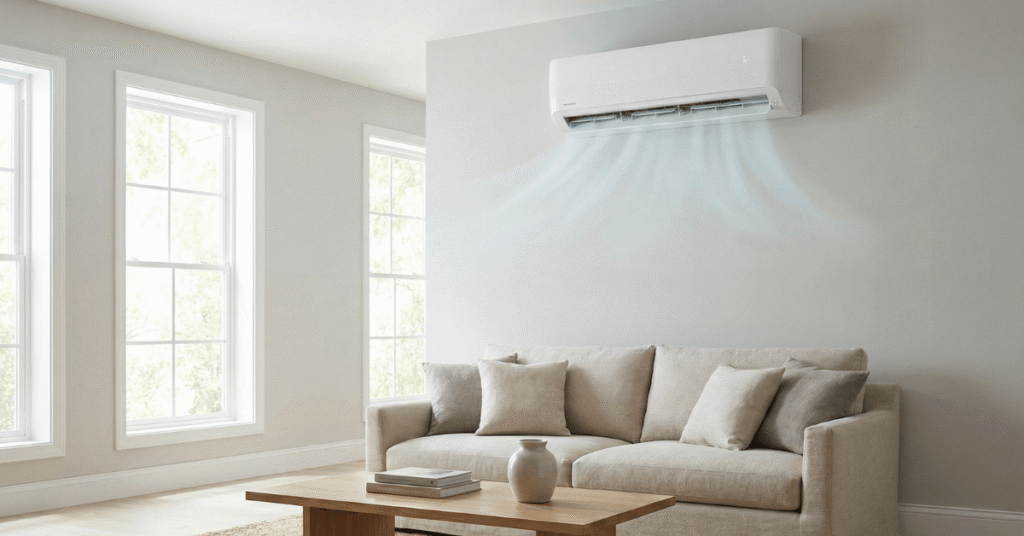
A ductless AC system, also called a ductless mini split, provides cooling and heating without requiring a network of air ducts throughout your home. The system consists of two main components: an outdoor compressor unit and one or more indoor air handlers mounted on walls or ceilings.
These components connect through a small conduit that houses refrigerant tubing, power cables, and a condensate drain. According to the U.S. Department of Energy, this simple connection requires only a small hole through the wall, making installation far less invasive than adding ductwork to an existing home.
The indoor unit draws warm air from the room, passes it over cold evaporator coils containing refrigerant, and releases cooled air back into the space. The refrigerant carries absorbed heat to the outdoor unit, where it releases the heat and cycles back inside. Most ductless systems also function as heat pumps, reversing this process to provide efficient heating during colder months.
When Does Ductless AC Make Sense for Your Home?
Ductless mini split systems solve specific cooling challenges that traditional central air cannot easily address. Understanding these scenarios helps you determine whether ductless technology fits your situation.
Older Homes Without Existing Ductwork
Many homes built before central air conditioning became standard lack the ductwork needed for traditional systems. Installing new ductwork in an existing home can cost $2,000 to $18,000 depending on the home’s size and layout. For these properties, ductless AC offers a practical alternative that avoids major construction while delivering reliable comfort.
Room Additions, Garages, and Converted Spaces
Finished basements, attic conversions, sunrooms, and detached garages often lack connections to existing HVAC systems. A ductless mini split provides independent climate control for these spaces without overloading your current system or requiring expensive ductwork extensions.
Homes With Hot and Cold Spots
If certain rooms in your home never seem to reach a comfortable temperature despite your central system running, a ductless unit can target those problem areas directly. This approach often proves more effective and economical than trying to balance an entire ducted system.
Homeowners Who Want Room-by-Room Comfort Control
Ductless systems allow different temperatures in different zones. Family members with different comfort preferences can each control their own space, and you can avoid cooling empty rooms.

What Are the Benefits of Ductless AC?
Ductless mini splits offer several advantages that make them increasingly popular among Billings homeowners. Here are the primary benefits to consider.
Superior Energy Efficiency. Traditional ductwork can account for more than 30% of energy consumption for air conditioning, according to the U.S. Department of Energy. Ductless systems eliminate these losses entirely. Top-rated models achieve SEER2 ratings up to 22 or higher, translating to significantly lower utility bills compared to older cooling systems.
Zone Control and Personalized Comfort. Each indoor unit operates independently with its own temperature settings. This targeted approach can reduce energy consumption by 25-40% compared to cooling an entire home at once, since you only condition the spaces you actually use.
Simpler Installation. Because no ductwork is required, ductless heating installation causes minimal disruption to your home. Most single-zone installations can be completed in a single day.
Year-Round Functionality. Most ductless mini splits function as heat pumps, providing both cooling in summer and efficient heating in winter. This dual capability makes them a versatile, all-season comfort solution.
Quieter Operation. The compressor sits outside, keeping noise away from living spaces. Indoor units operate at whisper-quiet levels, often below 50 decibels.
What Are the Drawbacks of Ductless AC?
While ductless systems offer many advantages, they are not the perfect solution for every home. Consider these potential limitations before making your decision.
Higher Upfront Cost for Whole-Home Cooling. Equipping an entire home with multiple indoor units can become expensive. While a single-zone system costs $2,500 to $6,000 installed, multi-zone systems serving four or five rooms can range from $8,000 to $15,000 or more.
Visible Indoor Units. Wall-mounted air handlers are visible inside each conditioned room. While modern designs are sleek and unobtrusive, some homeowners prefer the hidden vents of central air systems.
Regular Filter Maintenance. Ductless units require filter cleaning every two to six weeks for optimal performance. This maintenance is simple but more frequent than changing central air filters.
Less Effective Air Filtration. Ducted systems with whole-home air filtration remove allergens and particles more effectively than individual ductless units. If indoor air quality is a top priority, additional filtration solutions may be needed.

How Much Does Ductless AC Installation Cost?
Understanding the cost breakdown helps you budget appropriately and compare quotes from HVAC contractors. Installation costs vary based on system size, number of zones, and installation complexity.
A single-zone ductless mini split typically costs between $2,500 and $6,000 with professional installation. Multi-zone systems range from $5,000 to $8,000 for two zones and $8,000 to $15,000 or more for four or five zones. According to EnergySage, the average cost per ton of cooling capacity is approximately $4,944 when accounting for both equipment and labor.
Several factors influence your final cost:
- Number of indoor units needed to cover your desired zones
- System capacity measured in BTUs or tons
- SEER2 efficiency rating of the equipment
- Installation complexity including electrical upgrades or difficult mounting locations
- Brand and warranty options
For homeowners comparing single-zone and multi-zone mini split installations, consulting with a licensed HVAC professional ensures proper sizing and accurate cost estimates.
Available Incentives. ENERGY STAR-certified ductless heat pumps may qualify for federal tax credits of up to $2,000 under the Inflation Reduction Act. Many utility companies also offer rebates for high-efficiency equipment, potentially reducing your net investment by $500 to $1,000 or more.
Ductless AC vs Central Air: Which Is Better for Your Home?
The choice between ductless mini splits and central air conditioning depends largely on your home’s existing infrastructure and your specific comfort goals.
Choose ductless AC if:
- Your home lacks existing ductwork
- You are adding cooling to a room addition, garage, or converted attic
- You want independent temperature control in different rooms
- Energy efficiency and lower operating costs are top priorities
Choose central air if:
- Your home already has ductwork in good condition
- You prefer a single thermostat controlling whole-home temperatures
- Upfront installation cost is your primary concern
- You want superior whole-home air filtration
For a detailed comparison of efficiency, comfort, and costs between these two options, review our guide on ductless vs central air for small homes. Many homeowners also find value in combining both systems, using central air for main living areas while adding a ductless unit for a specific problem room or addition.

How to Decide If Ductless AC Is Right for You
Use this quick checklist to evaluate whether ductless AC fits your needs:
- Does your home lack existing ductwork? Ductless is likely your best option.
- Are you cooling a single room, addition, or converted space? Ductless excels here.
- Do you have rooms that never reach comfortable temperatures? Ductless can solve this problem.
- Do you want different temperatures in different rooms? Ductless provides this control.
- Does your home have functional ductwork and you want whole-home cooling? Central air may be more economical.
The most reliable way to determine the right solution is a professional assessment of your home. A licensed HVAC technician can evaluate your space, calculate proper equipment sizing, and provide accurate cost estimates for both ductless and central air options.
Schedule Your Ductless AC Consultation
Choosing the right cooling system is an important investment in your home’s comfort and energy efficiency. Our team at Platinum HVAC is here to help Billings homeowners evaluate their options and find the best solution for their specific needs.
Whether you are exploring mini split HVAC services for a single room or considering a multi-zone system for your entire home, we provide honest assessments and transparent pricing. Contact us today to schedule a consultation and get a professional recommendation tailored to your home.
