 Skip to content



If your furnace won’t start or keeps shutting off unexpectedly, the gas pressure switch might be the culprit. This small but essential safety component plays a critical role in keeping your heating system running safely and efficiently.
Understanding how this gas pressure switch works can help you recognize problems early and know when to call for professional furnace repair, installation, or cleaning services in Billings MT.
At Platinum HVAC, we’ve seen countless heating issues traced back to faulty pressure switch components. Let’s break down exactly what this type of pressure switch does and why it matters for your home comfort.
What Is a Gas Pressure Switch?
A gas pressure switch is a safety device installed in modern furnaces that monitors proper airflow and venting before allowing gas to flow to the burners. Think of it as a gatekeeper that ensures dangerous combustion gases are being properly expelled from your home before your furnace can fire up.
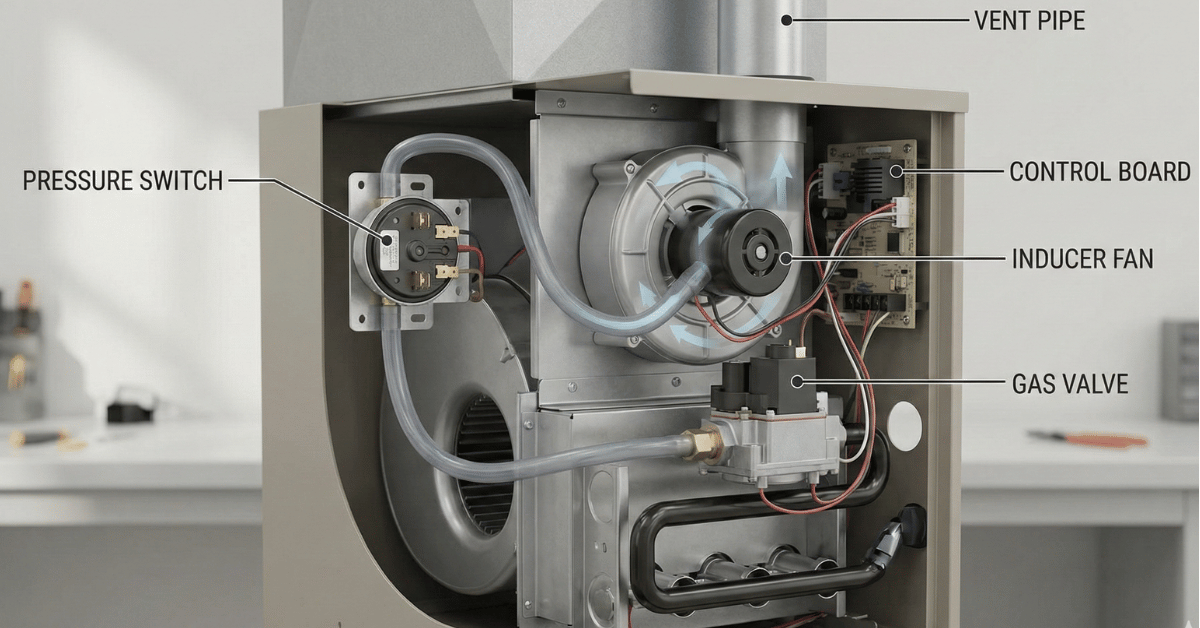
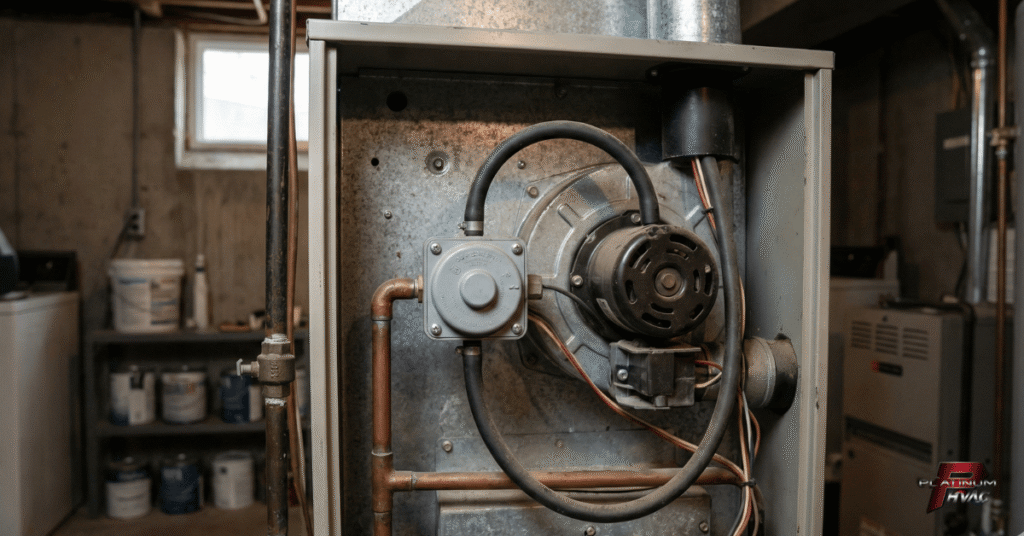
This type of pressure switch is typically located near the draft inducer motor, which is the fan responsible for pushing exhaust gases out through your venting system. The pressure switch works in tandem with this motor to verify that adequate draft pressure exists before the gas valve opens.
Without a functioning furnace pressure switch, your furnace could potentially operate without proper ventilation. This creates serious safety risks including carbon monoxide buildup inside your home. That’s why when this part fails, your furnace simply won’t start at all, preventing the furnace from operating unsafely.
How Does a Furnace Pressure Switch Work
The operating principle behind a gas pressure switch is surprisingly straightforward, yet incredibly important for safe furnace operation and gas pressure monitoring.
The Basic Operating Process
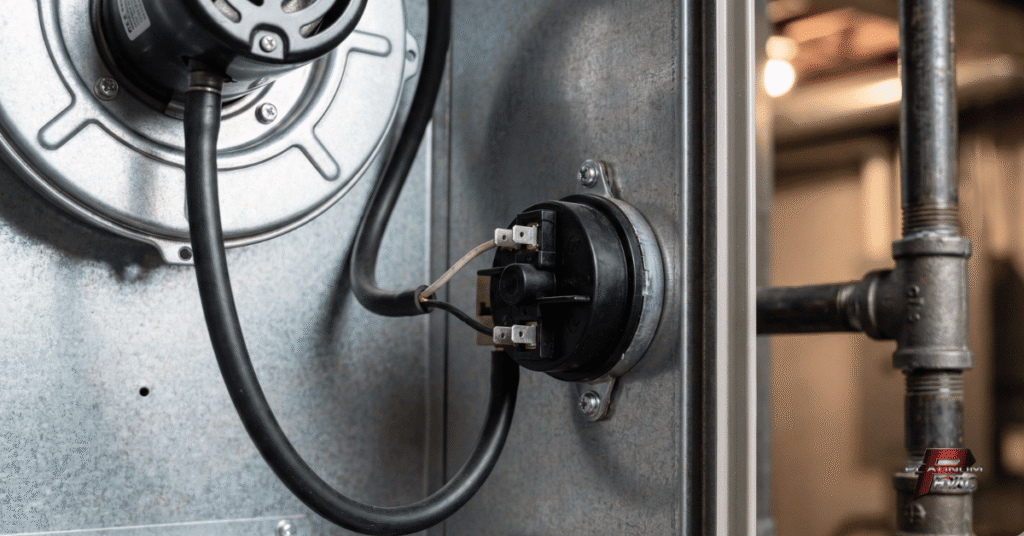
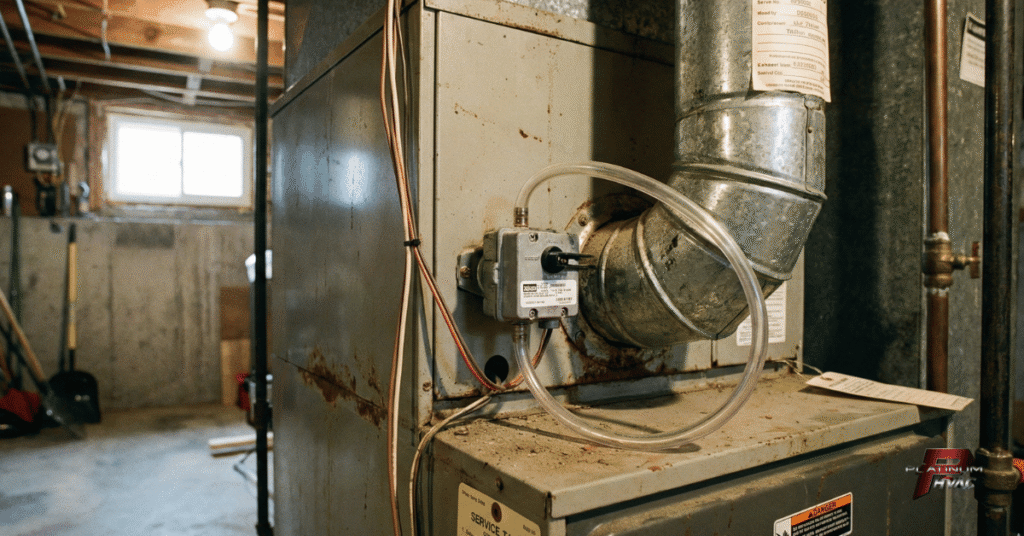
Inside the switch housing, you’ll find a flexible rubber diaphragm connected to electrical contacts. A small hose called pressure switch tubing runs from the draft inducer motor housing to the pressure switch. When the inducer motor runs, it creates negative pressure (suction) that travels through this tube.
As the pressure rises, it flexes the diaphragm inside the switch. When sufficient air pressure is reached, the diaphragm pushes the electrical terminals of the pressure switch together, completing a circuit. This electrical switch signals the furnace control board that proper venting exists and it’s safe to open the gas valve.
Gas Pressure Switch Work: Step-by-Step Function
Here’s what happens during a typical heating cycle:
Initial Startup:
- Your thermostat calls for heat
- The furnace control board activates the draft inducer motor
- The inducer motor begins pulling air through the heat exchanger, creating negative pressure systems
Pressure Building:
- As the motor runs, negative pressure builds in the pressure switch tubing
- System pressure gradually increases over several seconds
- The diaphragm inside the pressure switch begins to flex as pressure change occurs
Switch Activation:
- Once the preset pressure range is met, the switch contacts close
- The control board receives the “all clear” signal from the electrical switch
- The igniter activates and the gas valve opens for normal combustion
Continuous Monitoring:
- The pressure switch monitors operation throughout the heating cycle
- If pressure drops below the set threshold, the low pressure switch opens immediately
- This switch shuts down the furnace burners, preventing unsafe operation
- The safety system ensures proper gas pressure monitoring at all times
The entire process happens in less than 30 seconds under normal conditions. If your furnace takes longer to start or doesn’t start at all, the pressure switch could be malfunctioning. This is when you’ll need heating repair, cleaning, or installation services in Billings MT from experienced professionals like Platinum HVAC.
Common Gas Pressure Switch Problems
Pressure switches are durable components, but various types of pressure switches do fail over time. Recognizing the warning signs can save you from a complete heating system breakdown during Montana’s coldest nights.
Signs Your Pressure Switch Is Failing
Furnace Won’t Ignite: The most common symptom is a furnace that won’t start at all. You’ll hear the draft inducer motor running, but nothing else happens. The motor runs for 30-60 seconds, then shuts the furnace off without the burners ever lighting. This often indicates a faulty pressure switch or low gas pressure issue.
Intermittent Operation: Sometimes the furnace works perfectly, other times it refuses to start. This inconsistency often indicates a pressure switch that’s on the verge of complete failure. The diaphragm pressure mechanism might be sticking or the switch contacts may be corroded, causing the pressure switch may operate unpredictably.
Short Cycling: If your furnace starts but shuts off after just a few minutes, the low pressure switch might be opening prematurely. This happens when the switch is too sensitive or when there’s a venting problem creating pressure spikes and a drop in pressure during operation.
Common Causes of Failure
Clogged Pressure Tubes:
- Small diameter tubing easily collects debris, dust, or moisture
- Blockages prevent accurate pressure measurement and pressure sensing
- Can cause false readings even when venting is adequate
- Regular HVAC maintenance, cleaning, and inspection help prevent this issue
Failed Diaphragm:
- Rubber components in the diaphragm pressure mechanism deteriorate over time from heat exposure
- Cracks or tears prevent proper pressure sensing in negative pressure systems
- Usually requires complete pressure switch replacement
- More common in furnaces over 10 years old requiring repair or installation of new components
Stuck Contacts:
- Switch contacts can corrode or become pitted over time
- Prevents proper signal transmission to control board
- Sometimes causes intermittent operation where the pressure switch keeps failing
- Professional diagnosis required to locate the pressure issue and confirm repair needs
Incorrect Pressure Settings:
- Gas pressure switches are calibrated for specific pressure ranges
- Wrong replacement part won’t function within the appropriate pressure range
- DIY replacements often result in mismatched specifications and operating pressure issues
- Always use manufacturer-specified parts for proper installation
Types of Pressure Switches Used in Furnaces
Understanding different types of pressure switches helps you recognize what type of switch your heating and air conditioning system uses. While mechanical pressure switches are most common in residential furnaces, some newer systems use electronic pressure switch technology or digital pressure switches for more precise pressure measurement.
Mechanical Pressure Switch: The most common type of pressure switch in furnaces uses a simple diaphragm and switch contacts mechanism. This typical pressure switch responds to pressure change through physical movement of internal components.
Air Pressure Switch: Specifically designed to monitor air pressure in the venting system, ensuring negative pressure systems function correctly before the furnace operates.
Low Gas Pressure Switch: A specialized type that monitors inlet pressure and line pressure to ensure adequate gas supply. When low gas pressure monitoring detects issues, this low gas pressure switch prevents unsafe operation.
When to Call for Professional Furnace Repair
While some homeowners feel comfortable checking basic things like air filters, gas pressure switches require professional attention for repair, cleaning, or installation. These components involve both electrical connections and gas safety systems, which isn’t the place for DIY experimentation.
If you’re experiencing any furnace starting problems, contact Platinum HVAC for expert diagnosis. Our technicians have specialized tools including pressure gauges and pressure transducers to test if the pressure switch is operating correctly. We can quickly identify whether replacing the pressure switch is necessary or if there’s an underlying venting issue causing the problem.
We offer emergency HVAC service in Billings MT with 24/7 availability because we know heating failures don’t wait for business hours. A failed pressure switch means no heat, and that’s not something Montana families can ignore for long.
Preventing Pressure Switch Problems
Regular HVAC maintenance, cleaning, and inspection are your best defense against pressure switch failures and other heating system problems. During annual tune-ups, Platinum HVAC technicians inspect the pressure switch, clean pressure switch tubing, and verify the pressure switch is operating correctly within its pressure range.
Simple actions like changing your furnace filter every 1-3 months also help. A dirty filter restricts airflow, which can affect draft pressure and create a pressure drop across the system, putting extra strain on your pressure switch. This small maintenance task prevents bigger repair needs down the road.
Professional inspections catch small issues before they become expensive repairs or require full installation of new components. Our maintenance plans include comprehensive checks of all safety components, including gas pressure switches, flame sensors, and gas valves to ensure pressure remains stable.
Understanding Furnace Safety Systems
The gas pressure switch is just one part of your furnace’s multi-layered safety system. Since pressure switches serve as safety devices, modern heating equipment includes numerous sensors and switches designed to prevent unsafe operation under any circumstances. Pressure switches are electrical components that can be used alongside pressure sensors for comprehensive monitoring.
These safety features protect your family from carbon monoxide exposure and fire hazards. When one component fails, the entire system shuts down as a precaution. The pressure switch monitors fluid pressure and gas flow continuously, and when pressure exceeds the set limits or pressure drops below the set threshold, the switch to reset the system activates immediately.
At Platinum HVAC, we never bypass safety switches or recommend shortcuts during repair, cleaning, or installation. Our family-owned company is committed to keeping Billings families safe and comfortable through proper HVAC repair and maintenance practices.
Get Expert Heating Repair in Billings, MT
Understanding how your gas pressure switch works helps you recognise problems quickly, but repairs, cleaning, and installation should always be left to qualified professionals. Platinum HVAC brings years of experience and honest service to every furnace repair call in Billings, MT.
Whether you’re dealing with a pressure switch failure, need routine maintenance and cleaning, or require emergency heating service or installation, our team is ready to help. We provide expert workmanship and top-rated customer care that keeps your heating system running safely all winter long.
Contact Platinum HVAC today for reliable furnace repair, cleaning, installation, and maintenance services. We’re your trusted local HVAC contractor dedicated to your family’s comfort and safety.