 Skip to content



Key Takeaways
- Hail damages an AC condenser by bending the thin aluminum fins on the outdoor coil, which blocks airflow and lowers cooling efficiency.
- Most hail damage is repaired by combing the fins straight, a far cheaper fix than replacing the coil or the whole unit.
- Watch for visible dents, weak cooling, strange noises, higher energy bills, or refrigerant leaks after a storm.
- Standard homeowners insurance usually covers hail damage to an AC unit, but not damage from wear and tear or poor maintenance.
- Billings sits in one of Montana’s most active hail corridors, so post-storm condenser checks are worth scheduling promptly.
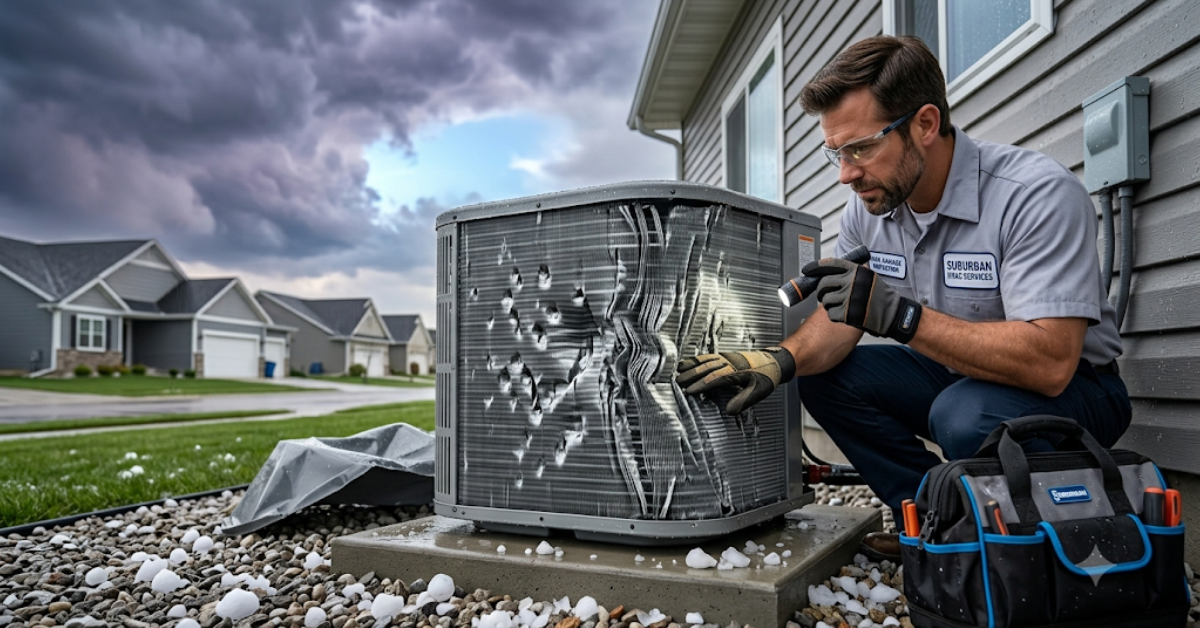
Hail damages your AC condenser by denting and flattening the thin aluminum fins that cover the outdoor coil. Bent fins block airflow across the coil, which forces the system to work harder and cool less. Minor damage is usually combed back into shape, while severe impacts may need a coil or full unit replacement.
After a hailstorm rolls through, your outdoor unit can take a beating even when the rest of your home looks fine. The good news is that a rough-looking condenser is often more fixable than it appears. This guide walks you through what hail does to the unit, how to spot the damage, your repair options, and how insurance fits in.

How Does Hail Damage an AC Condenser?
Your AC condenser is the outdoor part of the system, and it releases heat from your home into the outside air. It uses a coil made of copper tubing wrapped in many thin aluminum fins. A fan pulls air across these fins so the refrigerant inside can shed heat. Because the unit must sit outdoors to breathe, it is exposed to weather, including hail.
When hailstones strike the unit, they dent and deform those soft aluminum fins. According to forensic engineering analysis from VERTEX, hailstones larger than 3/4 inch in diameter are the main threat, and these storms are most common east of the Rocky Mountains. The National Weather Service has recorded an average of nearly 7,000 hail reports per year across the US, so this is far from a rare problem.
Bent fins press together and partly close off the coil. When airflow drops, the condenser cannot release heat efficiently. That leads to longer run times, weaker cooling, and added strain on the compressor.
Why Billings homes are at higher risk: Billings sits at the base of the Rimrock escarpment, directly in the path of storms that build over Wyoming and push across the high plains. Local storms have dropped hailstones up to 2.25 inches in diameter on neighborhoods like the Heights, Poly, and Shiloh Road. That size is well past the threshold for serious condenser damage.
If the problem goes past a quick homeowner check, Platinum HVAC LLC provides AC repair in Billings with same-day appointments across the Billings area.
What Are the Signs Your Condenser Has Hail Damage?
The clearest signs of hail damage to your AC condenser are visible dents on the unit, weaker cooling, unusual noises, and a sudden jump in energy bills. Some damage is easy to see, while other problems show up only in how the system runs.
Here is what to check after a storm:
- Visible dents or flattened fins. Look at the metal casing and the coil fins. Widespread denting is a strong signal.
- Weak or uneven cooling. If the system runs nonstop but struggles to reach your set temperature, airflow across the coil may be blocked.
- Strange noises. Clanking, grinding, or whirring can mean hail deformed the fan blades or pushed parts out of alignment.
- Higher energy bills. Blocked fins force longer run times, which shows up on your next statement.
- Refrigerant leak. A puddle near the unit or warm air from the vents can point to coil or line damage, as ROX Heating notes.
If you notice these signs, it helps to have a professional look before small problems grow. Our team handles fast, reliable AC repair in Billings and can confirm whether hail is the cause.

How Bad Is the Damage? Minor vs Moderate vs Severe
Hail damage to a condenser falls into three rough levels based on how deep the fins are bent and how much of the coil surface is affected. The level guides whether a simple repair will do or whether bigger work is needed.
| Damage Level | What It Looks Like | Typical Fix |
| Minor | Slight fin bending over about 10% of the surface | Comb fins straight |
| Moderate | Fins bent more than 1/8 inch deep, up to 30% of surface | Careful combing, more labor time |
| Severe | Dents 1/4 to 3/8 inch deep over 30%+ of surface | Coil or full unit replacement likely |
These thresholds come from field guidance shared by Air Specialist. Here is the part that surprises most homeowners: a unit can look terrible and still work fine. One engineering study found that coils with 41% of fin area flattened showed little to no drop in total cooling capacity, with only a 2 to 5% decrease in SEER efficiency. So a battered appearance does not always mean replacement. A proper system diagnostics check measures the real impact before you spend money.
Can Hail-Damaged Condensers Be Repaired or Do They Need Replacing?
Most hail-damaged condensers can be repaired by combing the bent fins back into shape, which restores airflow without replacing parts. Replacement becomes necessary only when the damage is severe or the copper tubing itself is harmed.
Fin combing uses a tool with teeth that slide between the aluminum slats and straighten them, similar to combing hair. It usually takes a few hours of labor and no new materials, which makes it far more cost-effective than a swap. Professional fin straightening typically runs $100 to $300, depending on the area affected.
Replacement comes into play when large hailstones crush the copper tubing or when so many fins are torn that combing will not hold. A full condenser coil replacement generally costs $900 to $2,800.
One caution: corrosion can change the math. As Alpine Intel explains, once aluminum fins begin to corrode they grow brittle and may snap rather than straighten. Units near sprinkler overspray or harsh conditions can corrode quickly, which sometimes pushes a repairable unit toward replacement.
Does Homeowners Insurance Cover Hail Damage to an AC Unit?
Yes, standard homeowners insurance usually covers hail damage to an AC unit, since hail is a sudden and accidental event. Coverage does not extend to damage from wear and tear, age, or lack of maintenance. Your deductible and policy limits still apply.
According to The Hartford, home insurance helps pay for HVAC repairs when the cause is a covered peril like hail, wind, or lightning. To protect your claim, take these steps:
- Document before cleanup. The Montana Commissioner of Securities and Insurance advises photographing all damage before you repair or clean anything.
- File promptly. Most Montana policies allow 1 to 2 years from the storm date to file, but faster reporting is always safer.
- Get multiple bids. State officials recommend comparing estimates and verifying any contractor is registered, insured, and bonded in Montana.
- Watch for storm chasers. Be cautious of unsolicited offers and high-pressure sales after a storm.
Hail claims are generally treated as no-fault in Montana, so a single claim is unlikely to raise your premium on its own.

How to Protect Your Condenser From Future Hail
You can lower the risk of future hail damage to your condenser with a few simple, dependable steps. Prevention costs far less than repeated repairs.
- Install a hail guard or protective cover. Durable covers shield the unit from hail and debris and can be removed during operation.
- Schedule regular maintenance. Routine inspections catch bent fins and early corrosion before they worsen. Our seasonal AC tune-ups keep the coil clean and airflow strong.
- Join a maintenance plan. An AC maintenance plan builds in yearly checks so small issues never become big ones.
- Add surge protection. A whole-house surge protector guards the electrical parts that control your condenser during storms.
Final Thoughts and Next Steps
Hail can leave your condenser looking rough, but the unit is often more repairable than it appears. Combing the fins restores most minor and moderate damage at a fraction of replacement cost, and a clear diagnosis tells you exactly where your unit stands. Just as important, prompt documentation protects your insurance claim and your wallet.
If a storm recently passed through your area, a quick professional check brings peace of mind before small damage turns into a bigger repair. Our licensed technicians are here to help with prompt, dependable emergency HVAC service across Billings and the surrounding communities. Contact Platinum HVAC today to schedule your after-storm condenser inspection.
Need a Billings HVAC technician today?
Platinum HVAC LLC is a family-owned, EPA-certified team serving Billings and Yellowstone County. We handle AC repair in Billings, 24/7 emergency calls, and financing on new systems.
Call (406) 671-8446 or request service online.
Platinum HVAC LLC, 1478 S 30th St, Billings, MT 59102
Related guides