 Skip to content




Key Takeaways
- According to Energy Star and the EPA, a typical home loses 20 to 30 percent of its conditioned air through leaks, holes, and poorly connected ducts
- Warning signs of duct leaks include uneven room temperatures, rising energy bills, and excess dust on surfaces
- Mastic sealant is the preferred professional repair material; it outlasts tape-based solutions significantly
- Ductwork generally lasts 10 to 25 years, but age is not the only factor in deciding between repair and replacement
- Professional duct leak testing using calibrated pressurization equipment provides the most accurate diagnosis
Air duct repair in Billings involves identifying leaks and damaged sections in your ductwork, sealing gaps with mastic sealant or metal tape, and restoring balanced airflow throughout your home. A licensed HVAC technician uses diagnostic tools including pressure testing and thermal imaging to locate leaks before sealing and retesting the system for performance.
Why Air Duct Repair Matters for Billings Homes
Billings homeowners face demanding HVAC conditions year-round. Montana winters push furnaces hard for months, and summer temperatures require consistent cooling performance. When ductwork is leaking, your system works harder than it should to deliver the same level of comfort, which drives up energy costs and shortens equipment life.
According to Energy Star, the average home with a forced-air system loses between 20 and 30 percent of its conditioned air through duct leaks, poor connections, and holes. For a home with a 3-ton HVAC system, that means you could be paying to heat or cool air that never reaches a single living space.
The U.S. Department of Energy confirms that leaky ducts can add hundreds of dollars per year to heating and cooling costs. In a climate like Billings, where systems run hard through both seasons, that loss adds up quickly over a billing cycle.
“The HVAC system in the majority of older residences is the biggest single energy consumer in the home, accounting for as much as half of a home’s total energy usage. Coupled with the fact that the average home’s ductwork leaks significantly, it is a recipe for major energy loss.” Sam Rashkin, Chief Architect, U.S. Department of Energy Building Technologies Office
Addressing duct leaks is not just about reducing bills. It is about making sure your system can deliver the performance you are paying for, room by room, across every season.
What Are the Warning Signs of Air Duct Leaks?
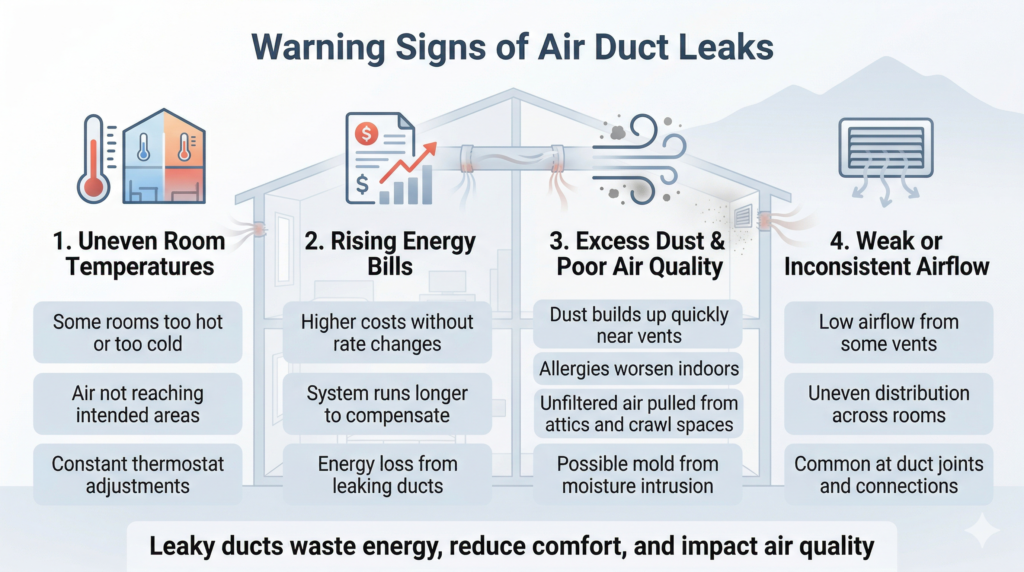
Air ducts are hidden inside walls, ceilings, floors, and attic spaces, which makes visual inspection difficult for most homeowners. However, a leaking duct system leaves clear signals that something is wrong. Recognizing these early can prevent expensive system damage and wasted energy.
Uneven Room Temperatures
One of the most reliable indicators of duct leaks is when some rooms feel noticeably warmer or cooler than others. Conditioned air should be distributed evenly throughout a home. When a duct leaks, air escapes before reaching its intended destination, leaving certain rooms underheated in winter or undercooled in summer.
If you find yourself constantly adjusting the thermostat but certain rooms never feel comfortable, a duct leak is a likely cause.
Rising Energy Bills Without a Rate Increase
A steady climb in monthly energy costs, without a corresponding increase in utility rates or changes in thermostat settings, is a strong indicator of duct leakage. When conditioned air escapes through gaps and holes, your furnace or air conditioner runs longer to compensate, consuming more fuel or electricity.
“When ducts leak, air from the surrounding area enters into the ductwork and mixes with conditioned air. Unwanted contaminants spread throughout the home, and the system consumes more energy trying to compensate for what it has lost.” Energy Star Program, U.S. Environmental Protection Agency
Excess Dust and Poor Indoor Air Quality
Duct leaks create negative pressure within the system, which pulls unfiltered air from attics, crawl spaces, and basements into the ductwork. That air carries dust, mold spores, insulation particles, and other contaminants that then circulate through your living areas.
If you notice dust accumulating quickly on surfaces near vents, or if allergy symptoms seem worse indoors, your duct system may be pulling in contaminated air from unconditioned spaces. The EPA specifically warns that moisture entering through leaky ducts can lead to mold growth inside the system, creating ongoing air quality problems.
Weak or Inconsistent Airflow from Vents
Hold your hand near a supply register while your system is running. If airflow feels weak or inconsistent compared to other vents in the home, air is likely escaping through a nearby leak before it reaches the register. This is especially common at duct joints and connectors, which are the most frequent failure points in any duct system.
According to HVAC industry authority ASHRAE, duct leakage occurs in 75 percent of all buildings, making this one of the most common and underdiagnosed HVAC problems in residential homes.
What Causes Air Duct Damage in the First Place?
Understanding why ducts fail helps homeowners recognize risk factors before problems become serious. Most duct damage develops gradually over time rather than from a single event.
Age and Wear at Joints and Connectors
Ductwork is designed to last 10 to 25 years, depending on materials and installation quality. As systems age, the connections between duct sections, at elbows, connectors, and boots, begin to loosen. Thermal expansion and contraction from seasonal heating and cooling cycles stress these joints repeatedly, eventually causing separations and gaps.
Duct tape used during original installation is a common failure point. As noted by the U.S. Department of Energy, cloth-backed rubber adhesive duct tape tends to fail over time and should not be used as a long-term sealing material. Many older homes have duct tape repairs that have degraded and now actively leak.
Pest Damage, Moisture, and Physical Impact
Rodents and insects can compromise duct integrity by chewing through flexible ductwork or nesting inside sections. Moisture intrusion in attics or crawl spaces can cause metal ducts to corrode and flexible duct liners to deteriorate. Physical damage from renovation work, foot traffic in attics, or stored items pressing against ductwork can also create tears and disconnections.
“Ductwork can develop leaks over time from poor installation and general wear and tear. Aging or corroded air ducts can cause holes, cracks, or separations to form. Physical damage from pests and rodents can also compromise the integrity of the ductwork, leading to potential leaks.” HVAC.com Editorial Team, HVAC Industry Resource
Poorly Sealed Original Installation
In many cases, duct leakage begins on installation day. Poorly sealed seams, improperly fitted connectors, and skipped insulation steps create systems that leak from the start. According to research published by the U.S. Department of Energy, very little attention was historically paid to ductwork sealing during home construction, leaving most existing systems with performance gaps baked in from the beginning.
How Does Professional Air Duct Repair Work in Billings?
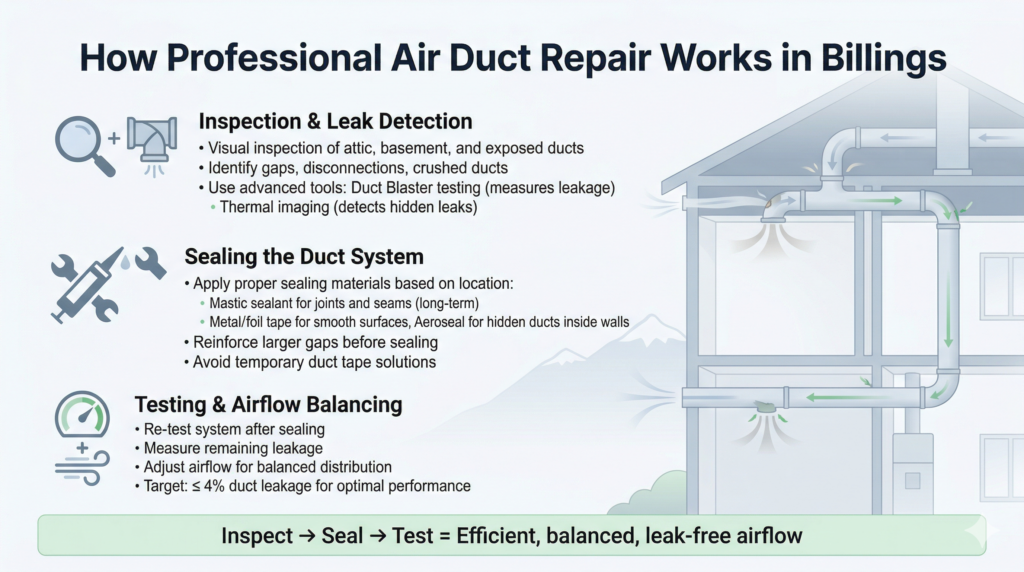
A professional air duct repair is a structured process that moves from detection to sealing to verification. Each phase serves a specific purpose, and skipping any step leaves performance improvements incomplete.
Step 1: Inspection and Leak Detection
A licensed HVAC technician begins with a thorough visual inspection of all accessible ductwork, including attic runs, basement sections, and exposed areas near the air handler. They look for visible gaps, disconnected sections, crushed flex duct, and signs of previous repairs.
For hidden leaks, professionals use two primary diagnostic tools:
- Duct Blaster Pressurization Testing: A calibrated fan is connected to the duct system, which is then pressurized to a specific level. The amount of airflow required to hold that pressure indicates how much the system is leaking. This is the recognized industry standard for quantifying duct leakage.
- Thermal Imaging Cameras: On supply ductwork under positive pressure, temperature differences on the surface can reveal leak points. For return ductwork under negative pressure, a portable blower is used to pressurize the system while thermal imaging scans for escaping air.
Platinum HVAC’s HVAC diagnostics process identifies root causes before any repair work begins, ensuring the right fix is applied in the right location.
Step 2: Sealing with the Right Materials
Once leaks are located, the choice of sealing material determines how long the repair holds.
| Sealing Method | Best For | Durability |
| Mastic Sealant | Joints, seams, and accessible connections | Long-term; preferred by DOE |
| Metal/Foil Tape (UL-listed) | Smooth metal duct surfaces | Long-term with proper adhesion |
| Aeroseal (aerosol sealant) | Hidden ductwork inside walls and ceilings | Excellent; seals from the inside out |
| Cloth-backed duct tape | Temporary only | Poor; degrades and fails |
The U.S. Department of Energy recommends mastic sealant as the preferred material for duct seams and joints. It is more durable than any available tape and bridges small gaps effectively. For gaps larger than a quarter inch, professionals first bridge with mesh reinforcement tape before applying mastic over the top.
“Duct mastic is the preferred material for sealing ductwork seams and joints. It is more durable than any available tape and generally easier for a do-it-yourself installation. Avoid cloth-backed, rubber adhesive duct tape as it tends to fail quickly.” U.S. Department of Energy, Energy Saver Program
For ductwork concealed inside walls and ceilings, Aeroseal technology allows a technician to inject a non-toxic aerosol sealant directly into the pressurized duct system. The adhesive particles seek out and seal leak points from the inside, reaching areas that cannot be accessed manually.
Step 3: Airflow Testing and Balancing After Repair
Sealing leaks changes the pressure dynamics of the entire duct system. After repairs are complete, a qualified technician runs a follow-up pressurization test to measure remaining leakage and confirm the system meets performance targets.
Industry best practice targets duct leakage of 4 percent or less. Reaching that level often requires multiple rounds of sealing and testing, addressing the largest leaks first, then re-testing to locate remaining points of air loss.
Platinum HVAC’s system diagnostics service includes post-repair airflow verification to ensure every room in your home receives its intended supply of conditioned air.
When Is Duct Sealing Enough vs. Full Duct Replacement?
Not every duct problem requires replacement. The decision depends on the extent of the damage, the age of the system, and whether leaks are isolated or widespread.
When Sealing Is the Right Solution
Professional duct sealing is appropriate when:
- Leaks are localized at joints, connectors, or accessible sections
- The ductwork is less than 15 years old and in otherwise good condition
- There is no widespread physical damage, corrosion, or pest infestation
- The existing duct layout is correctly sized for the HVAC system
In these cases, targeted sealing restores performance at a fraction of the cost of replacement. Most homeowners notice lower energy bills and improved comfort within the first billing cycle after a quality seal job.
When Duct Replacement Makes More Sense
Replacement becomes the smarter investment when:
- Ductwork is more than 15 to 20 years old with extensive deterioration
- Corrosion, mold, or pest damage is widespread throughout the system
- The original ductwork is undersized or improperly designed for the home
- Extensive home renovations require rerouting duct runs regardless
A home that has experienced flood or fire damage often requires full replacement, as structural integrity cannot be verified through sealing alone.
According to HVAC.com, ductwork that is more than 15 years old with extensive damage should be evaluated for full replacement, since the investment eliminates ongoing leakage and delivers reliable performance for another decade or more.
Platinum HVAC provides ductwork air quality services in Billings that include a full assessment of your current system before recommending repair or replacement.
Is Duct Repair Worth the Investment? Here Is the Energy Savings Answer
Yes, duct repair is one of the highest-return HVAC investments a Billings homeowner can make. When 20 to 30 percent of your conditioned air is escaping through leaks, sealing those leaks directly recovers that lost output. Your system does not need to run as long, your monthly bills decrease, and your equipment experiences less wear.
The U.S. Department of Energy confirms that leaky ducts add hundreds of dollars per year to heating and cooling costs. In Montana, where both heating and cooling seasons are significant, that savings potential is compounded across twelve months of operation.
Beyond energy savings, sealed ductwork delivers measurable improvements in:
- Indoor air quality: Less contaminated air from attics and crawl spaces enters living areas
- System lifespan: Your furnace and air conditioner experience less strain and fewer operating hours
- Home comfort: Even room temperatures without hot or cold spots
- Safety: Reduced risk of backdrafting, which occurs when leaky return ducts pull combustion gases from gas appliances back into the living space
“Sealing leaks can minimize the risk of backdrafting, where combustion gases from appliances such as water heaters, furnaces, and dryers are drawn back into the living space rather than expelled to the outdoors. Properly sealed ductwork improves safety in addition to comfort and efficiency.” Energy Star Program, U.S. Environmental Protection Agency
How Often Should Billings Homeowners Inspect Their Ductwork?
Air duct systems do not come with a visible warning light. Most homeowners only discover duct problems when energy bills climb or comfort declines noticeably. A proactive schedule prevents those surprises.
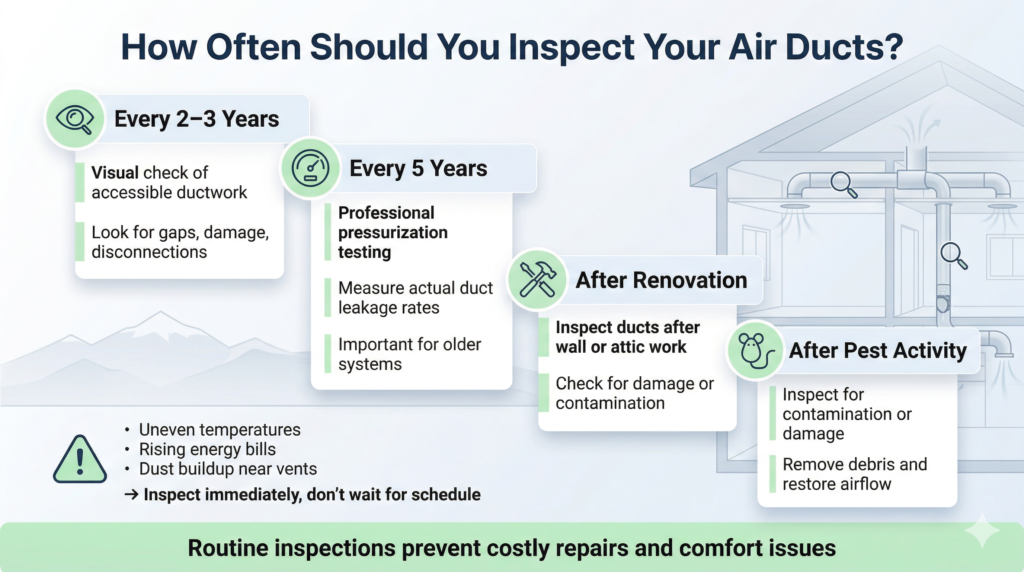
Recommended inspection intervals for Billings homes:
- Every 2 to 3 years: Visual inspection of all accessible ductwork for visible gaps, disconnections, and signs of damage
- Every 5 years: Professional pressurization testing to measure actual leakage rates, especially for homes with older duct systems
- After any major renovation: Duct integrity should be verified whenever walls, ceilings, or attic spaces are disturbed
- After pest activity: Any confirmed rodent or insect infestation near ductwork warrants a professional inspection
If your Billings home experiences extremely uneven temperatures, unexplained utility cost increases, or visible dust buildup near registers, schedule an inspection sooner rather than later regardless of the last service date.
For urgent comfort issues, Platinum HVAC offers emergency HVAC service in Billings with fast response and professional diagnostics.
Schedule Air Duct Repair in Billings with Platinum HVAC
Leaky ductwork quietly costs Billings homeowners money every day, one lost degree of heat at a time. The good news is that professional duct sealing and repair is a straightforward process that delivers immediate and measurable results.
Platinum HVAC LLC is a certified, family-owned HVAC contractor serving Billings and the surrounding Montana communities. Our licensed technicians use professional-grade diagnostic tools to locate every leak before sealing your system to industry performance standards. Whether your home needs targeted sealing, a full duct assessment, or guidance on choosing the right HVAC company in Billings, our team is ready to help.
Contact Platinum HVAC today to schedule your air duct inspection. We will identify exactly what your system needs and give you a clear plan for restoring efficient, comfortable airflow throughout your home.