 Skip to content




Key Takeaways
- Ignition failures are the most common reason a furnace produces no heat. Hot surface ignitors last 3 to 5 years and cost $150 to $300 to replace professionally.
- Dirty flame sensors cause short cycling (the furnace lights, then shuts off within seconds). Cleaning often resolves the issue, and replacement runs $75 to $250.
- Blower motor problems show up as weak airflow, strange noises, or cold air from the vents. Replacement costs average $300 to $900 for most residential systems.
When your Billings furnace stops heating properly, the problem usually traces back to one of three components: the ignition system, the flame sensor, or the blower motor. Each produces distinct symptoms, and knowing what to look for helps you communicate the issue clearly to your technician and avoid unnecessary delays. Platinum HVAC provides fast, reliable furnace repair in Billings and diagnoses all three of these common failures.
How Your Furnace Ignition System Works and Why It Fails
Modern gas furnaces use electronic ignition rather than the old standing pilot light. The most common type is a hot surface ignitor (HSI), a ceramic element that heats to over 2,000 degrees Fahrenheit to ignite the gas flowing from the burners. Some systems use direct spark ignition instead, which creates an electrical spark similar to a gas stove.
Hot surface ignitors are effective but fragile. The constant thermal cycling (heating up and cooling down every time the furnace runs) causes the ceramic material to degrade. Most HSIs last 3 to 5 years before needing replacement, according to multiple industry sources. Silicon nitride ignitors tend to last longer than silicon carbide models, but all ignitors eventually wear out.
Signs your ignitor is failing include the furnace not starting at all despite the thermostat calling for heat, clicking sounds without ignition, the blower running but only pushing cold air, short cycling (the furnace starts then shuts off within seconds), or a delayed ignition accompanied by a loud bang as gas builds up before lighting.
If you hear repeated ignition attempts followed by a lockout, your furnace’s safety controls are working as designed. The system shuts down after multiple failed attempts to prevent gas buildup. At that point, a professional HVAC diagnostic is the safest next step.
Typical repair cost: A new hot surface ignitor part costs $30 to $60, with professional installation bringing the total to $150 to $300 including diagnostics and labor.
What Does a Flame Sensor Do and When Does It Need Attention?
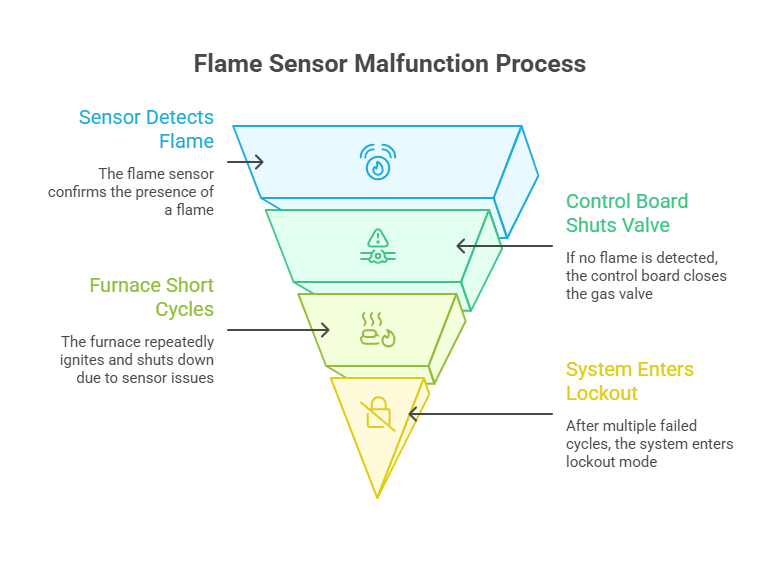
The flame sensor is a small metal rod positioned in the path of the burner flame. Its job is to confirm that the gas actually ignited after the ignitor fires. If the sensor does not detect a flame within a few seconds, the control board shuts the gas valve as a safety precaution.
A dirty flame sensor is one of the most common causes of furnace short cycling. Over time, carbon buildup, soot, and corrosion accumulate on the sensor rod, preventing it from reading the flame signal correctly. When this happens, the furnace lights normally, runs for 3 to 10 seconds, then shuts off because the sensor cannot confirm the flame exists.
Symptoms of a dirty or failing flame sensor:
- The furnace ignites but shuts down within seconds, then tries again (and again)
- The system enters lockout mode after multiple failed cycles
- Yellow or orange burner flames instead of steady blue (indicating incomplete combustion)
- Visible soot accumulation around the burner assembly
Cleaning often restores a flame sensor to full function. A technician removes the sensor and gently scrubs the metal rod with fine-grit sandpaper or emery cloth to remove carbon deposits. The flame sensor has a typical lifespan of about 5 years, meaning most homeowners will need it replaced two to three times during a furnace’s 15 to 20 year life.
Typical repair cost: Flame sensor cleaning during a service call costs $75 to $150. Replacement, including parts and labor, runs $75 to $250 depending on furnace model and local rates.

If the problem goes past a quick homeowner check, Platinum HVAC LLC provides furnace repair in Billings with same-day appointments across the Billings area.
How to Tell If Your Blower Motor Needs Repair or Replacement
The blower motor drives the fan that pushes heated air through your ductwork and into every room. Without it, your furnace can generate heat but cannot deliver it. Blower motors are built to last 10 to 20 years with proper maintenance, but they can fail earlier due to dirt buildup, overheating, electrical issues, or worn bearings.
Warning signs of blower motor trouble include weak or uneven airflow from your vents, unusual noises such as grinding, rattling, or high-pitched squealing, the furnace running but producing no airflow at all, frequent system cycling or overheating shutdowns, and unexplained spikes in your energy bills.
According to HomeAdvisor, blower motor replacement averages around $560, with most homeowners paying between $300 and $900 depending on motor type, size, and accessibility. Variable-speed ECM motors cost more than standard single-speed PSC motors but use up to 75% less electricity, according to industry data. Labor typically adds $150 to $250 to the total cost.
If your blower motor is failing and your furnace is more than 15 years old, it may be worth evaluating whether replacing both the furnace and AC together makes more financial sense than investing in a major repair on aging equipment.
Can You Troubleshoot These Problems Before Calling a Technician?
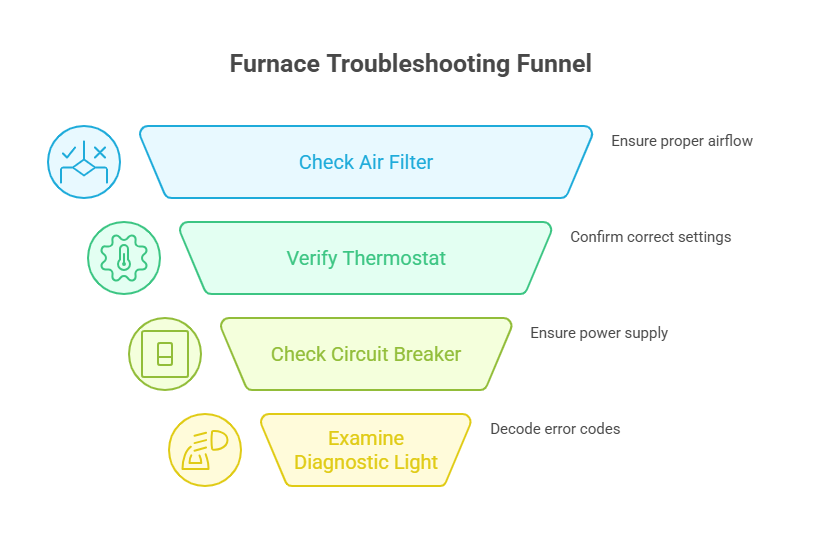
There are a few basic checks every Billings homeowner can perform safely before scheduling a service call.
Check your air filter first. A severely clogged filter restricts airflow, which can cause the furnace to overheat and trigger safety shutdowns that mimic ignitor or blower motor failures. If your filter is visibly dirty or has not been changed in three or more months, replace it and restart the furnace.
Verify thermostat settings. Confirm the thermostat is set to “Heat” (not “Cool” or “Off”) and that the fan switch is set to “Auto.” A thermostat set to “On” runs the blower continuously, which can feel like cold air between heating cycles.
Check the circuit breaker. Electronic ignition systems and blower motors require electricity. A tripped breaker can prevent the furnace from operating at all. Reset the breaker and monitor whether the issue recurs.
Look at the furnace diagnostic light. Most modern furnaces have an LED on the control board that blinks in specific patterns to indicate error codes. Check your owner’s manual or the chart on the furnace access panel to decode the flashing sequence. This information helps your technician diagnose the problem faster.
If these basic checks do not resolve the issue, do not attempt to open gas connections or handle ignitor components yourself. The oils from bare hands can damage a new ignitor, and improper handling of gas components creates serious safety risks. Professional furnace repair is always the safest path.
How Do You Prevent These Common Furnace Failures?
Routine maintenance is the single most effective way to extend the life of your ignitor, flame sensor, and blower motor. An annual heating service tune-up includes cleaning the flame sensor, inspecting the ignitor for cracks or wear, checking blower motor operation and electrical connections, and replacing or cleaning the air filter.
Billings winters regularly bring extended stretches of below-zero temperatures that push furnaces to run near continuously. That sustained operation accelerates wear on all three of these components. Catching a cracked ignitor or dirty flame sensor during a fall tune-up prevents a no-heat emergency at 2 a.m. in January.
Platinum HVAC’s licensed technicians service all major furnace brands and carry common replacement parts including ignitors, flame sensors, and blower motors for same-day repairs whenever possible. Contact us today to schedule a diagnostic or explore our emergency HVAC service for after-hours Billings furnace repair.
Need a Billings HVAC technician today?
Platinum HVAC LLC is a family-owned, EPA-certified team serving Billings and Yellowstone County. We handle furnace repair in Billings, 24/7 emergency calls, and financing on new systems.
Call (406) 671-8446 or request service online.
Platinum HVAC LLC, 1478 S 30th St, Billings, MT 59102
Related guides