 Skip to content




Key Takeaways
- Single-stage AC runs at 100% capacity every cycle, costs less upfront (typically $500 to $2,500 less installed), and works well for smaller Billings homes with shorter cooling demands.
- Two-stage AC operates at roughly 60 to 70% capacity most of the time, delivers more consistent temperatures, better humidity control, and quieter operation with SEER ratings typically between 17 and 18.
- For most Billings homeowners, two-stage AC offers better long-term value through lower energy bills, extended equipment life, and improved comfort during hot summer stretches.
Two Stage vs Single Stage AC: Which Is Better?
For Billings homes that run air conditioning regularly through June, July, and August, a two-stage AC typically provides the better balance of comfort, efficiency, and long-term savings. Single-stage systems still make sense for budget-conscious homeowners or smaller homes with lighter cooling needs. Platinum HVAC helps Billings, MT homeowners evaluate both options and installs the right system for their home’s size, layout, and cooling demands.
How Single-Stage and Two-Stage AC Systems Work
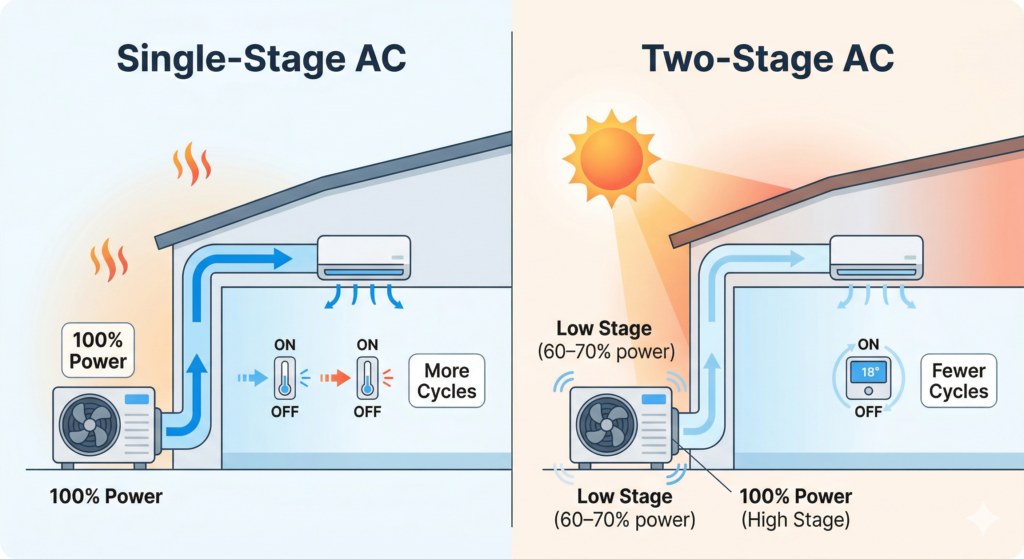
A single-stage air conditioner has one mode: full blast. When your thermostat calls for cooling, the compressor turns on at 100% capacity. It runs at maximum output until the temperature drops to your set point, then shuts off completely. The cycle repeats every time the temperature rises above the thermostat setting.
A two-stage air conditioner has a compressor with two distinct operating levels. The low stage runs at approximately 60 to 70% of full capacity, while the high stage delivers 100% output. Under normal conditions, the system defaults to low stage and handles cooling needs at that reduced level about 80% of the time, according to Carrier’s two-stage system guide. The high stage only kicks in during extreme heat or when the home needs rapid cooling after a large temperature adjustment.
The practical difference is how often the system cycles on and off. A single-stage AC turns on and off frequently throughout the day. A two-stage system runs for longer periods at lower output, which affects everything from energy consumption to indoor comfort.
Does a Two-Stage AC Actually Save Energy in Billings?
Yes, but the savings depend on how often and how long you use your AC during the summer.
Two-stage air conditioners typically carry SEER ratings between 17 and 18, while single-stage systems generally fall between 14 and 16. According to The Home Depot’s SEER efficiency guide, energy savings increase by about 7% for each additional SEER point. That means a two-stage system rated at 17 SEER could use roughly 20 to 25% less electricity than a single-stage unit rated at 14 SEER.
The savings are most noticeable during extended cooling periods. Billings summers typically bring highs in the mid-80s with periodic heat waves pushing into the mid-90s. During those multi-day stretches of sustained heat, a two-stage system running on low stage for hours at a time uses significantly less power than a single-stage unit cycling on and off at full capacity. Each startup sequence draws the most energy, so fewer on-off cycles mean lower utility bills.
For Billings homeowners who cool their homes consistently from June through August, the efficiency advantage of two-stage AC adds up. In homes where the AC only runs occasionally on the hottest afternoons, the savings may be more modest.
How Does Each System Handle Comfort and Humidity?
This is where two-stage AC pulls significantly ahead, and it matters more than many Billings homeowners expect.
Temperature consistency. A single-stage AC creates noticeable temperature swings. It might let the house warm to 74 or 75 degrees before kicking on, then cool it down to 71 or 72 before shutting off. You feel those fluctuations, especially in rooms farther from the thermostat. A two-stage system maintains temperatures within one to two degrees of your set point by running longer at lower output. The Department of Energy recommends variable capacity systems specifically for their ability to deliver enhanced dehumidification and exceptional comfort through nearly continuous operation.
Humidity removal. Air conditioners remove moisture as a byproduct of cooling. Effective dehumidification requires the system to run long enough for air to pass over the evaporator coil repeatedly. Single-stage systems cool quickly and shut off before removing adequate moisture, leaving indoor air feeling clammy. Two-stage systems run longer on low stage, pulling significantly more humidity from the air. Billings may not have Gulf Coast humidity, but summer afternoons with thunderstorm moisture can make the difference noticeable.
Noise levels. A single-stage AC operating at 100% capacity moves a large volume of air and produces more audible airflow noise from both the outdoor condenser and indoor vents. Two-stage systems are notably quieter on low stage because the compressor and blower run at reduced speed. If your condenser sits near a bedroom window or outdoor living area, the noise difference is meaningful.
What Is the Cost Difference Between Single-Stage and Two-Stage AC?
The upfront cost gap is real but not as dramatic as many homeowners assume.
| Factor | Single-Stage AC | Two-Stage AC |
|---|---|---|
| Equipment + Installation | $3,500 to $6,500 | $4,500 to $8,500 |
| Typical Cost Premium | Baseline | $650 to $2,500 more |
| SEER Rating Range | 14 to 16 | 17 to 18 |
| Monthly Energy (summer) | Higher (frequent cycling) | 15 to 25% lower |
| Expected Lifespan | 12 to 15 years | 15 to 18 years |
| Humidity Control | Basic | Superior |
| Noise Level | Louder (full capacity only) | Quieter (low stage 80% of time) |
| Repair Complexity | Simpler, parts widely available | Slightly more complex |
Two-stage units cost roughly $650 to $2,500 more than a comparable single-stage system depending on the brand, model, and tonnage. That premium buys you higher efficiency, better comfort, and potentially a longer equipment lifespan because the compressor experiences less stress from reduced startup cycles.
For Billings homeowners working within a tighter budget, HVAC financing options can spread the cost difference across manageable monthly payments. In many cases, the lower monthly energy bills from a two-stage system offset a significant portion of the financed premium.
Which System Is the Better Long-Term Investment for Billings?
Over a 15-year ownership period, two-stage AC typically delivers the stronger return for most Billings homes.
The math works like this: if a two-stage system saves $15 to $30 per month during a four-month cooling season, that adds up to $60 to $120 per year in energy savings. Over 15 years, that is $900 to $1,800 in reduced utility costs alone. Factor in the longer expected lifespan (avoiding one premature replacement cycle) and less wear on the compressor, and the two-stage system often costs less to own over its full life than a single-stage unit that needs replacing sooner.
Two-stage systems also tend to maintain higher home resale value because buyers increasingly look for energy-efficient, quiet, and comfortable cooling when evaluating Billings properties.
That said, the single-stage AC is not a bad choice in every situation. It remains the right fit for certain homeowners and homes.

When Does a Single-Stage AC Make More Sense?
A single-stage system is the smarter pick if your cooling season is limited to occasional hot days rather than sustained summer use, if your home is smaller (under 1,200 square feet) with an open floor plan that cools evenly, if your budget is firm and you need the lowest possible upfront cost, or if you plan to sell the home within the next three to five years and want to minimize your investment.
Single-stage systems are also simpler to repair. Parts are widely available, and any HVAC technician in Billings can service them quickly. For homeowners who prioritize low maintenance costs and straightforward operation, single-stage delivers reliable cooling without added complexity.
Should You Consider Variable-Speed AC Instead?
Variable-speed air conditioners adjust output anywhere from 25% to 100% capacity, delivering the most precise temperature control and highest SEER ratings (20+). They also carry the highest price tags and more expensive repairs.
For most Billings homes, two-stage AC hits the sweet spot between cost and comfort. If you are weighing all your options, our guide on replacing your furnace and AC together explains how bundling installations can reduce overall costs.
How Platinum HVAC Helps You Choose the Right System
Selecting between single-stage and two-stage AC is not just about the equipment. Proper sizing, ductwork condition, and installation quality all determine whether your new system performs as expected. An undersized or improperly installed two-stage system will not deliver the efficiency and comfort advantages it is designed for.
Platinum HVAC’s licensed technicians perform a full load calculation for your Billings home, assess your existing ductwork, and recommend the system that matches your cooling needs and budget. Whether you choose single-stage or two-stage, professional installation ensures your system runs at peak efficiency from day one.
Contact Platinum HVAC today to schedule a consultation, or explore our AC installation services and seasonal AC tune-up plans to keep your system performing at its best through every Billings summer.