



Key Takeaways
- A professional summer AC tune-up in Billings covers inspection and cleaning of both indoor and outdoor components, refrigerant checks, electrical testing, and thermostat calibration
- Billings July highs regularly reach 85°F and above, putting real demand on residential cooling systems
- Properly maintained AC systems can reduce cooling energy use by up to 15%, according to the U.S. Department of Energy
- Skipping annual tune-ups can void manufacturer warranties and increase the risk of costly mid-summer breakdowns
- A typical tune-up visit takes between 35 and 60 minutes when performed by a licensed technician
A summer AC tune up in Billings includes a full inspection of your outdoor condenser unit, indoor evaporator coil, refrigerant levels, electrical connections, capacitors, air filter, and thermostat calibration. A licensed technician cleans critical components, identifies developing faults, and confirms your system is ready to handle peak summer demand before temperatures climb.
Billings summers arrive quickly and push residential cooling systems hard. With July average highs reaching 85.3°F and temperatures occasionally climbing toward 90°F and beyond, your AC has no room for inefficiency. A tune-up scheduled in late spring or early summer is one of the most reliable ways to protect your home comfort, control energy costs, and avoid the frustration of a breakdown on the hottest day of the year.
Why Billings Homeowners Schedule an AC Tune-Up Before Summer
Billings Summers Push AC Systems Hard
Billings sits in a semi-arid climate zone that delivers short but intense summers. According to climate data compiled from 1991 to 2021, July is the warmest month with average highs of 85.3°F and an average of nearly 12 hours of sunshine per day. August follows closely with highs averaging 83°F.
That means your cooling system runs for extended periods under high solar load, often from late June through early September. Systems that have not been serviced since the previous cooling season are carrying accumulated dust, worn electrical contacts, and potentially degraded refrigerant levels into that demand period.
Early Tune-Ups Prevent Peak-Season Breakdowns
HVAC technicians experience their highest call volumes in July and August, which are the same months when your system is most stressed. Booking a tune-up in May or early June puts your service ahead of that demand curve and gives your technician adequate time to order any parts needed before the heat arrives.
As Mike Laird, a certified HVAC systems trainer with 20 years in residential diagnostics, explains: “Most AC failures we see in mid-summer trace back to a component that showed early warning signs months earlier. A thorough spring inspection catches around 80% of those issues before they become emergency calls.”
Proactive maintenance keeps you in control of the timeline and the cost.
What Does a Summer AC Tune Up Billings Include?
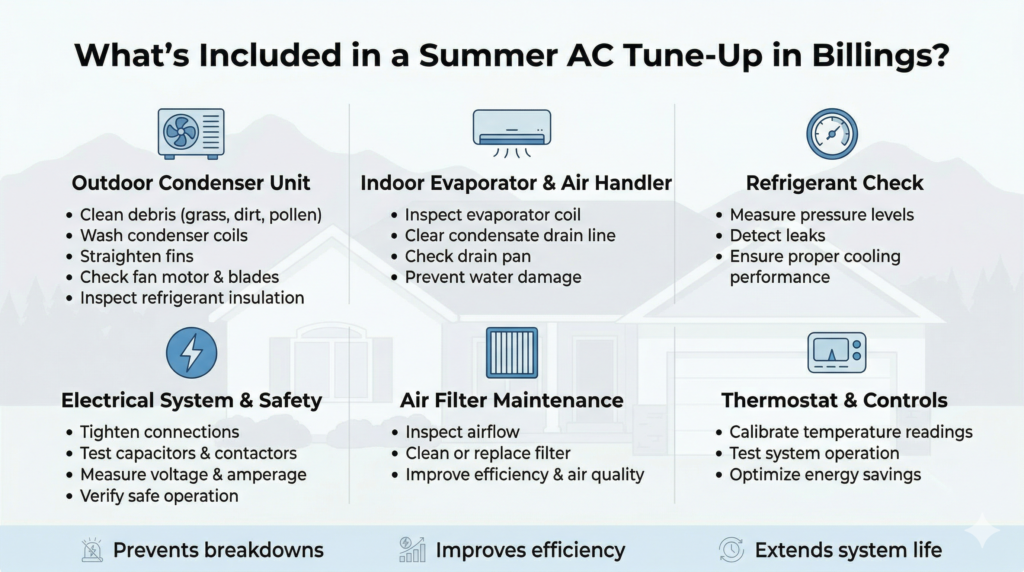
A professional seasonal AC tune-up is not a simple filter swap. It is a systematic evaluation and cleaning of the components that determine how efficiently and reliably your system runs. Our professional AC maintenance in Billings covers every critical area listed below.
Outdoor Condenser Unit Inspection and Cleaning
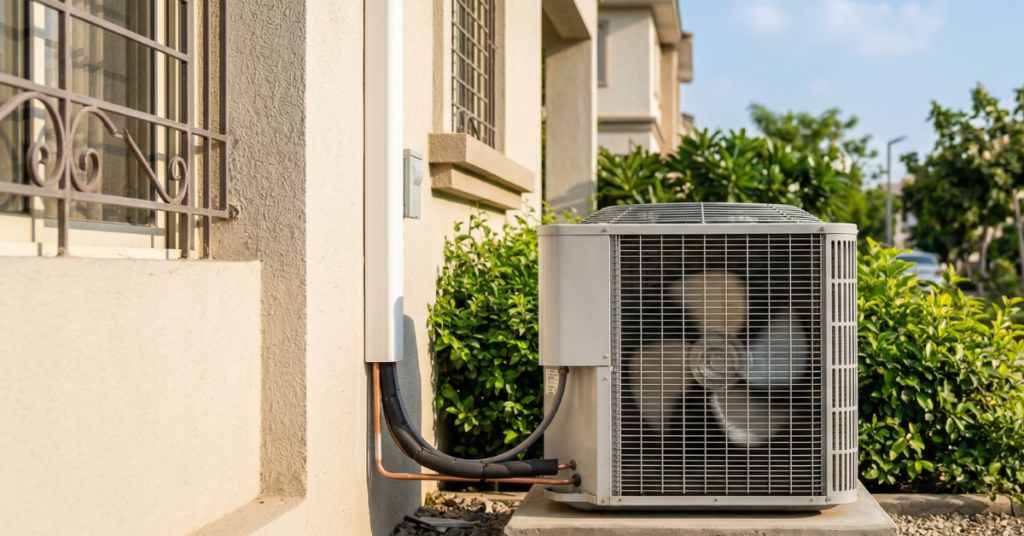
The outdoor condenser unit expels heatfrom your home to the outside air. Over winter and spring, it collects debris including grass clippings, cottonwood seeds, dirt, and pollen that restrict airflow through the coils.
During a tune-up, the technician will:
- Clear all debris from around and inside the unit
- Clean the condenser coils using appropriate coil cleaner
- Inspect and straighten bent condenser fins
- Check the condenser fan motor and blade for wear
- Inspect refrigerant line insulation for degradation
Dirty condenser coils force your system to work harder to reject heat, raising energy consumption and accelerating component wear. According to the U.S. Department of Energy, air conditioning accounts for roughly 6% of all energy consumed in the United States, and a poorly maintained system uses measurably more than a clean, tuned one.
Indoor Evaporator Coil and Air Handler Check
The evaporator coil sits inside your air handler and absorbs heat from the air in your home. It is less visible than the outdoor unit but equally important. A restricted or dirty evaporator coil reduces cooling capacity and can lead to freezing, which stops cooling entirely.
The technician will inspect the coil for dirt buildup, check the condensate drain line for blockages or algae growth, and verify that the drain pan is clear. A blocked condensate drain is a leading cause of water damage inside homes during the cooling season.
“The condensate system is the most overlooked part of a routine tune-up,” says Jennifer Okafor, a residential HVAC service coordinator with over 15 years of field experience. “A clogged drain line can cause water to back up into the air handler and damage the blower motor or the surrounding structure. Five minutes of attention during a tune-up can prevent a very expensive repair.”
Refrigerant Level Inspection
Refrigerant is the substance that transfers heat from inside your home to the outdoors. If your system is low on refrigerant, it cannot cool effectively, and your compressor works harder to compensate. Over time, that strain leads to compressor failure, which is one of the most expensive AC repairs a homeowner can face.
During a tune-up, the technician checks refrigerant charge using pressure measurements. If levels are low, they will trace the source because refrigerant does not simply deplete over time. A low reading indicates a leak that needs to be located and repaired before more refrigerant is added.
Electrical Components and Safety Testing
Electrical faults are a leading cause of AC system failure and, in some cases, fire risk. A full summer tune-up includes:
- Inspecting and tightening all electrical connections
- Testing capacitors for proper operation
- Checking contactors for pitting or burning
- Measuring voltage and amperage draws on the compressor and fan motors
- Verifying safe operation of the disconnect box
Capacitors are particularly prone to failure as they age, and they often degrade gradually before failing completely. Catching a weak capacitor during a routine inspection costs a fraction of what an emergency replacement call costs on a 95-degree afternoon.
Air Filter Inspection and Replacement
A clean air filter is essential for adequate airflow across the evaporator coil. A clogged filter restricts airflow, reduces cooling performance, and forces the blower motor to work harder. Depending on the filter type installed and how long it has been in service, the technician will either clean or replace it during the tune-up visit.
Homeowners in Billings should note that local dust and seasonal pollen levels can reduce filter life faster than the calendar schedule suggests. A general rule is to inspect filters every 30 days during active cooling months.
Thermostat Calibration and System Controls
The technician will verify that your thermostat is reading temperature accurately and communicating properly with both the indoor and outdoor units. They will also cycle the system through a full operational test, measuring supply and return air temperatures to confirm the system is producing the expected temperature differential.
For homes with older mechanical thermostats, this is also a good time to discuss upgrading to a programmable or smart thermostat. According to the U.S. Environmental Protection Agency’s ENERGY STAR program, homes with smart thermostats can save approximately $100 per year on heating and cooling costs.
How Long Does an AC Tune-Up Take?
A standard residential AC tune-up takes between 35 and 60 minutes to complete. The exact time depends on the size of your system, how accessible the equipment is, and whether the technician finds any issues that require additional attention during the visit.
If the technician identifies a developing problem such as a weak capacitor, a slow refrigerant leak, or a dirty coil that needs deep cleaning, the visit may run longer. That additional time is an investment, not an inconvenience. It means the technician has caught something before it becomes a failure.
How Much Can a Summer Tune-Up Save You on Energy Bills?
The energy savings potential of a well-maintained AC system is significant. The U.S. Department of Energy notes that correctly maintaining your air conditioning can reduce energy use by up to 15%. On a typical Montana household cooling bill, that is a meaningful reduction over the course of a full summer.
Duct leakage is another efficiency factor that a thorough tune-up brings to light. Research cited by HVAC industry sources indicates that up to 30% of a system’s cooling energy can be lost through leaky ductwork. While full duct sealing is a separate service, a tune-up inspection can identify whether duct losses are contributing to poor performance.
David Hicks, a building energy consultant and former ASHRAE chapter presenter, puts it plainly: “An annual AC tune-up is one of the few home maintenance investments where the return is almost immediate. Between reduced energy consumption and avoided repair costs, most homeowners recover the cost of the service within a single cooling season.”
Our seasonal AC tune-up service is designed with Billings homes in mind, covering the full inspection and cleaning protocol that translates directly to lower operating costs.
What Happens If You Skip the Annual AC Tune-Up?
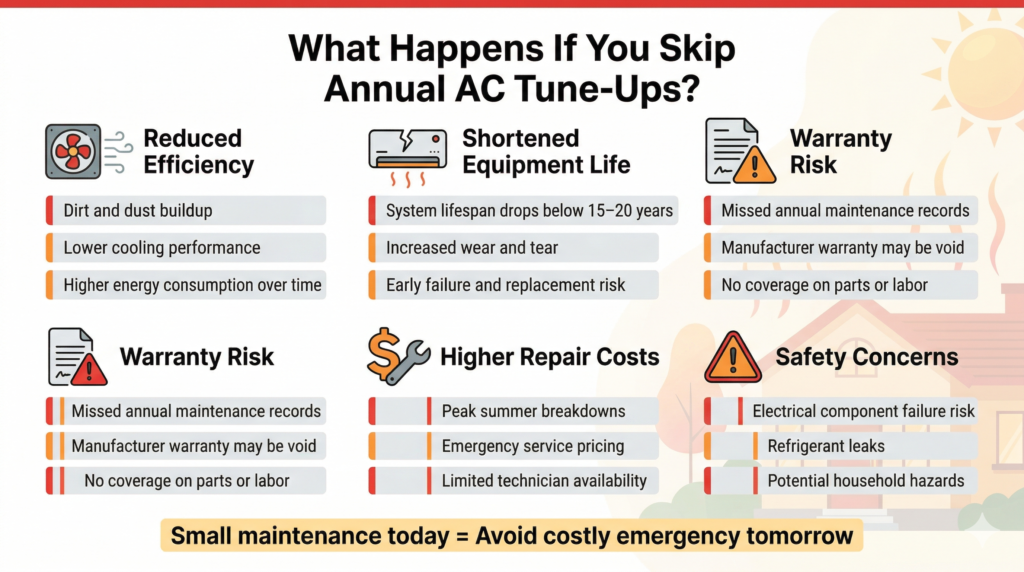
Skipping a year or two of maintenance rarely causes an immediate catastrophic failure. However, the cumulative effects are predictable:
- Reduced efficiency: Dirt, dust, and wear reduce the system’s cooling output and increase energy consumption each year maintenance is deferred
- Shortened equipment life: A well-maintained AC system can last 15 to 20 years. A neglected system often fails significantly earlier, requiring a full AC repair in Billings or replacement
- Warranty risk: Many AC manufacturers require documented annual maintenance to keep the warranty valid. Skipping tune-ups may void coverage on parts and labor
- Higher emergency repair costs: Breakdowns that happen in peak summer demand typically cost more to address due to technician availability and the urgency of the situation
- Safety concerns: Failing electrical components and refrigerant leaks are not just performance issues. They carry real safety implications for your household
If deferred maintenance leads to a complete system failure during a Billings heat wave, you may need same-day support. Our emergency HVAC service is available when urgent situations arise, but a proactive tune-up is always a better outcome than an emergency call.
How Often Should Billings Homeowners Schedule an AC Tune-Up?
The standard recommendation from HVAC industry professionals is once per year for each system. For a conventional central AC system in Billings, that means one inspection in late spring before the summer cooling season begins.
Homes with heat pump systems benefit from two service visits per year, one in spring and one in fall, since heat pumps handle both heating and cooling. If your system is more than 10 years old, or if it runs for extended periods during Billings summers, more frequent check-ins can be worthwhile.
The best time to schedule in Billings is April through early June. By mid-July, HVAC service schedules tend to fill quickly as homeowners react to problems rather than prevent them.
Schedule Your Summer AC Tune-Up with Platinum HVAC in Billings
Getting your AC ready for a Billings summer does not need to be complicated. A single service visit from a licensed technician covers every component that determines whether your system runs efficiently and reliably through July and August.
Platinum HVAC LLC serves Billings and the surrounding Montana communities with certified, dependable HVAC maintenance. Our technicians follow a thorough inspection protocol and take the time to explain what they find so you can make informed decisions about your home comfort.
If you are not sure which contractor to work with, our guide to choosing the right HVAC company in Billings can help you ask the right questions before booking any service.
Contact us today to schedule your summer AC tune-up and head into the warm months with peace of mind.