



Key Takeaways
- A frozen AC in July is caused by restricted airflow, low refrigerant, clogged drain lines, or a faulty blower fan
- Repairing frozen coils costs between $150 and $650 on average, and compressor damage from running a frozen unit can push that figure well above $3,000
- The single most common and preventable cause is a dirty air filter
- Turn the system completely off at the thermostat the moment you spot ice, and allow up to 24 hours for full thaw
- Scheduling a seasonal AC tune-up before peak summer is the most reliable way to prevent refreeze
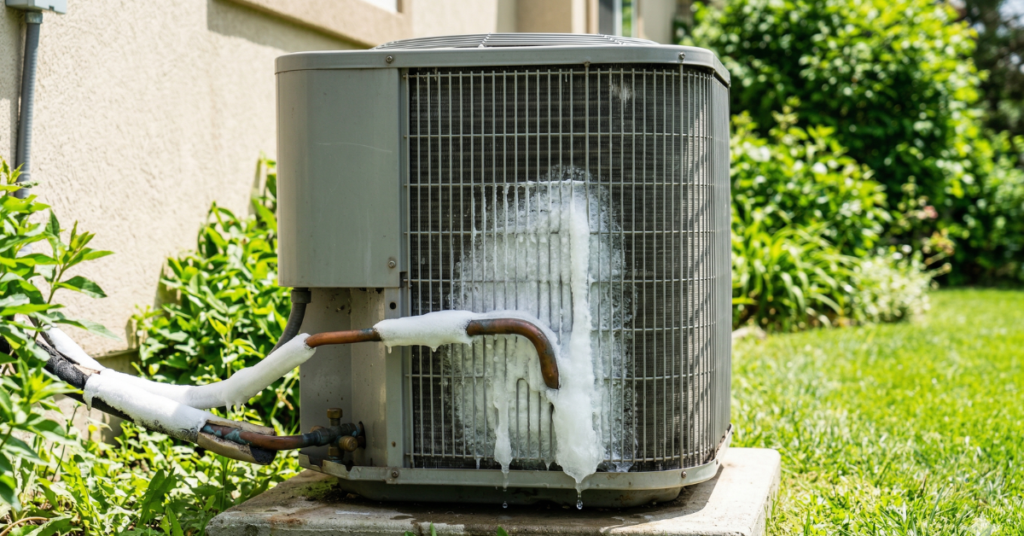
A frozen AC in July means your evaporator coil has dropped below 32°F, causing moisture to ice over and block heat exchange. The result is warm air from your vents and a cooling system that cannot do its job. The most common triggers are a dirty air filter, low refrigerant, blocked vents, or a clogged condensate drain. All of these are preventable with the right maintenance steps.
Why Does an AC Freeze Up in the Middle of Summer?
It sounds like a contradiction. Temperatures in Billings, Montana can climb into the 90s during July, so finding a block of ice inside your cooling system feels like it makes no sense. But it happens regularly, and the physics behind it are straightforward.
Your air conditioner works by circulating refrigerant through an evaporator coil. As warm air from your home passes over that coil, the refrigerant absorbs the heat, cools the air, and sends it back through your vents. The coil is designed to get cold. However, it must stay above freezing. When something disrupts the steady flow of warm air across the coil or throws the refrigerant pressure off balance, the coil temperature drops below 32°F. Moisture in the surrounding air then condenses directly onto the coil surface and freezes.
The Science Behind a Frozen Evaporator Coil
The evaporator coil sits inside your air handler or furnace cabinet. It contains copper tubing filled with refrigerant. Under normal operating conditions, warm return air from your home keeps the coil surface above freezing even as the refrigerant inside stays extremely cold.
When that warm airflow is reduced or refrigerant pressure falls too low, the coil cannot absorb enough heat. The temperature of the coil surface drops, moisture freezes on the fins and tubing, and that ice layer acts as an insulator. The insulation makes heat transfer even worse, which causes more ice to form. Once the process starts, it compounds quickly.
Common Warning Signs to Watch For
Catching a freeze-up early gives you more options and protects your compressor. Watch for these signals:
- Warm air blowing from vents even though the system is running
- Visible ice or frost on the refrigerant lines or indoor unit cabinet
- Water pooling near the indoor unit from melting ice
- Unusually long run cycles with the system never reaching the set temperature
- Higher than normal energy bills because the system is working harder
“A frozen coil is almost never the real problem. It’s a symptom. Something upstream caused that ice to form, and we need to fix that, not just melt the ice.” Gary Musaraj, Owner and EPA-Certified HVAC Professional, Jupitair HVAC (15+ years experience, EPA Section 608 Universal Certification)
What Are the Most Common Causes of a Frozen AC in July?
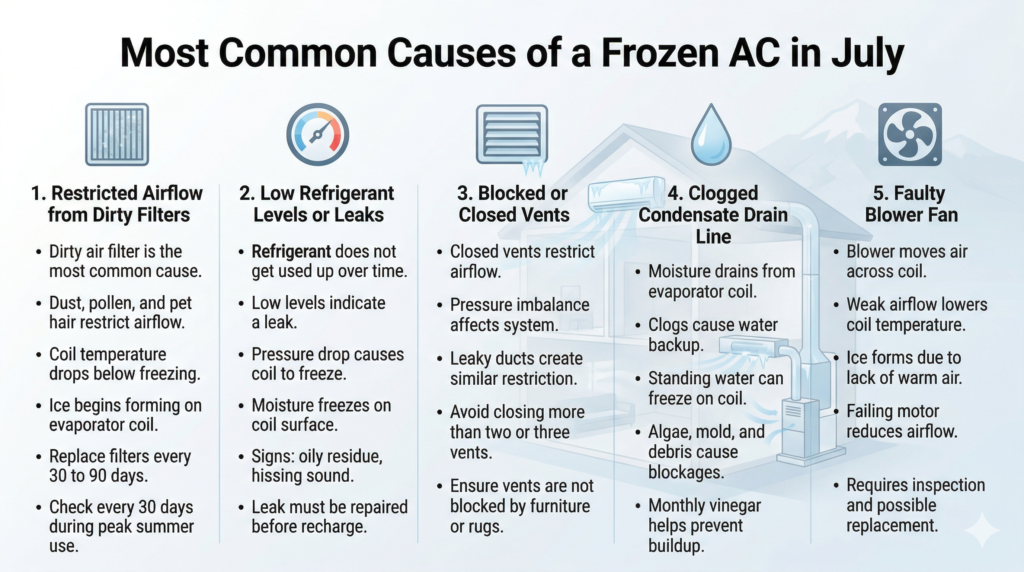
Understanding what causes a frozen AC in July helps you prevent the problem from repeating. Most freeze-ups trace back to one of five root causes.
Restricted Airflow from Dirty Filters
A dirty air filter is the single most common cause of a frozen air conditioner. When the filter becomes clogged with dust, pollen, and pet hair, warm return air cannot flow freely across the evaporator coil. Without that steady supply of warm air, the coil temperature drops below freezing and ice begins to form.
According to Trane Technologies, a dirty filter can lead directly to a dirty evaporator coil, compounding the problem further. Filters should be replaced every 30 to 90 days depending on your household conditions. During peak summer use in Billings, checking your filter every 30 days is the smarter standard.
If your AC is running but not cooling, a clogged filter is the first thing to check before anything else.
Low Refrigerant Levels or Leaks
Low refrigerant is the second most common cause. Your AC operates on a closed refrigerant system, meaning refrigerant does not get used up over time. If refrigerant levels are low, you have a leak somewhere in the system.
Low refrigerant causes a pressure drop in the evaporator coil. That pressure drop allows the coil to get colder than it should, and moisture freezes onto the surface. Recharging refrigerant without fixing the leak is a temporary fix. A licensed HVAC technician must locate and repair the leak before recharging. Refrigerant repairs typically cost $300 or more depending on the severity and refrigerant type.
Watch for an oily residue near your indoor coil or a faint hissing sound near the outdoor condenser. These are signs of an active refrigerant leak.
Blocked or Closed Vents
Closing supply or return vents to redirect airflow is a common practice, but it creates airflow pressure imbalances that starve the evaporator coil. A-1 Heating notes that leaky ductwork creates the same restriction as blocked vents. As a general rule, avoid closing more than two or three vents at any time in a central air system.
Walk through your home and confirm that no vents are blocked by furniture, rugs, or curtains. Return air vents in particular need clear space around them to pull adequate air volume across the coil.
Clogged Condensate Drain Line
As your AC cools the air, it removes humidity. That moisture drips off the evaporator coil into a drain pan and flows out through the condensate drain line. When that drain line becomes clogged with algae, mold, or debris, water backs up into the drain pan. That standing water can reach the evaporator coil and freeze.
Pouring a half-cup of white vinegar into the condensate drain pan monthly helps prevent algae buildup. If you notice standing water near your indoor unit, the drain line likely needs clearing. Our trusted AC maintenance in Billings includes drain line inspection as a standard step.
Faulty Blower Fan
The blower fan generates the airflow that keeps the evaporator coil above freezing. A fan running at reduced speed, or one with a failing motor, cannot move enough air across the coil. The result is the same as a clogged filter: insufficient warm air, dropping coil temperature, and eventually ice formation.
A blower motor replacement costs between $300 and $600 on average. A licensed technician can diagnose a weak motor during a routine inspection before it causes a full freeze-up.
What Should You Do When You Find a Frozen AC Unit?
Acting quickly and in the right order protects your compressor and gets cooling restored faster.
- Turn the system off at the thermostat immediately. Switch from COOL to OFF. Running a frozen system forces the compressor to work against a restricted coil, which can cause permanent compressor damage. Compressor replacement can cost $1,500 to $3,000 or more.
- Switch the fan setting to ON. Moving warm indoor air across the frozen coil speeds up the thaw without running the compressor. Set the fan to ON rather than AUTO to ensure continuous airflow.
- Do not chip or scrape the ice. The copper tubing and aluminum fins on an evaporator coil are easily damaged. Force will cause more harm than good.
- Inspect and replace the air filter. Check whether the filter is clogged. A saturated or heavily dirty filter is often the direct cause. Replace it before restarting.
- Check all supply and return vents. Open every vent in the home and remove any furniture or rugs blocking airflow.
- Allow the coil to fully thaw. Depending on the severity of the freeze, this can take between a few hours and a full 24 hours. Place towels near the indoor unit to absorb melting water.
- Clear water from the drain pan. Mop up excess water to prevent damage to the cabinet and nearby components.
- Restart the system and monitor. Once fully thawed, switch the system back to COOL and watch for normal operation. If ice returns within 24 hours, the cause is something beyond a dirty filter, such as a refrigerant leak or mechanical failure.
“Ignoring a frozen system can overheat the compressor, leading to a four-figure replacement. Save your budget and your summer comfort by acting quickly.” H&H Heating and Air Conditioning, HVAC repair specialists
How Do You Prevent Your AC From Refreezing After a Thaw?
Preventing refreeze requires addressing the root cause, not just thawing the ice. Here are the key prevention steps that work together to keep your system ice-free through July and beyond.
Change Your Air Filter Monthly During Cooling Season
During peak summer use, a standard 1-inch filter can become restrictively dirty in less than 30 days. Set a calendar reminder and check the filter every month from June through September. Households with pets or allergy sufferers should check even more frequently.
Using the correct filter size and MERV rating matters as well. A filter with too high a MERV rating can restrict airflow just as much as a dirty one. When in doubt, ask your HVAC technician which filter specification is right for your system.
Schedule a Professional AC Tune-Up Before Peak Summer
The U.S. Department of Energy confirms that properly maintained HVAC systems save up to 15% on energy bills annually. Annual professional maintenance also catches the issues that cause freeze-ups before they develop. A pre-summer seasonal AC tune-up should include:
- Refrigerant level and pressure check
- Evaporator and condenser coil cleaning
- Blower motor inspection and speed testing
- Condensate drain line flushing
- Vent and ductwork inspection
A standard tune-up costs between $75 and $200. That investment compares favorably against a frozen coil repair averaging $150 to $650, or compressor damage that can exceed $3,000.
Keep All Vents Open and Unobstructed
Walk through your home once a month and confirm every supply and return vent is fully open and clear. Rearrange furniture if needed. Balanced airflow throughout the home supports steady warm air circulation across the evaporator coil.
A blocked return vent is one of the fastest ways to trigger a coil freeze because the system cannot pull enough warm air from the living space. Trane Technologies recommends keeping landscaping at least two feet away from the outdoor condenser unit as well, to support adequate airflow through the condenser coil.
Set Your Thermostat Wisely
Avoid setting your thermostat extremely low for extended periods, especially overnight. According to Smedley Service HVAC professionals, a thermostat setting around 78°F balances comfort and efficiency while reducing the risk of coil over-cooling.
Most AC systems are designed to operate comfortably when outdoor temperatures are above 60°F. Running the system when nighttime temperatures in Billings drop below that threshold increases freeze risk. A programmable thermostat can automatically shut the cooling cycle off when outdoor temperatures fall below the safe operating range.
Clear the Area Around Your Outdoor Condenser
The outdoor condenser unit needs open space to release heat effectively. Overgrown shrubs, tall grass, cottonwood debris, and stacked items close to the unit block airflow and force the system to work harder. Gently rinse the condenser fins with a garden hose each season to remove pollen and debris buildup.
When Is a Frozen AC a Sign of a Bigger Problem?
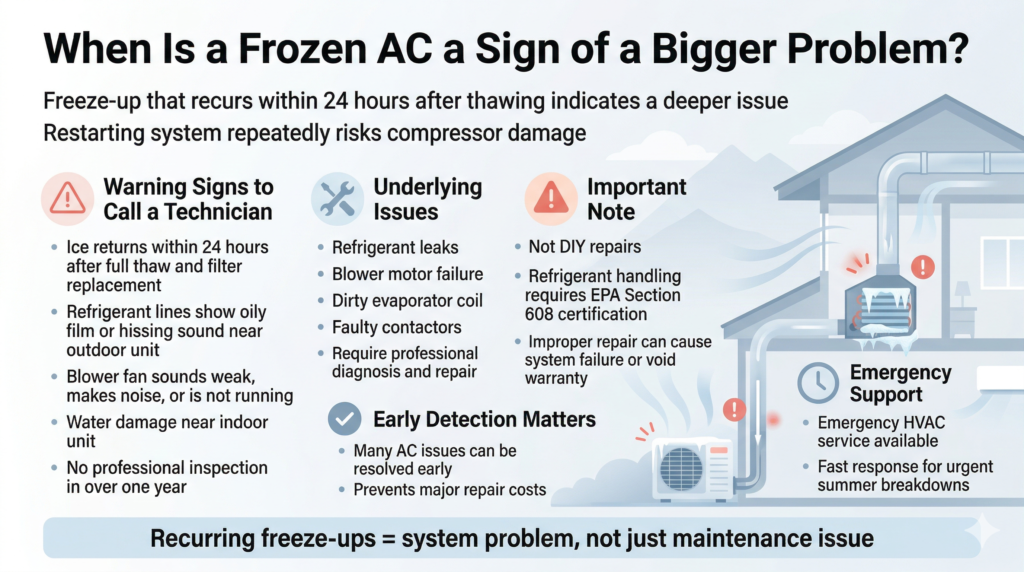
A freeze-up that recurs within 24 hours of thawing is a signal that something beyond maintenance is involved. At that point, continuing to thaw and restart the system risks compressor damage.
Call a licensed technician if any of these conditions apply:
- Ice returns within 24 hours after a full thaw and filter replacement
- Refrigerant lines show an oily film or you hear hissing near the outdoor unit
- The blower fan sounds weak, makes unusual noises, or is not running
- Water damage has occurred near the indoor unit
- The system has not had a professional inspection in more than one year
Issues like refrigerant leaks, blower motor failures, dirty evaporator coils, and faulty contactors all require professional diagnosis and repair. These are not DIY fixes. Refrigerant handling requires an EPA Section 608 certification, and improper repair attempts can cause system failure or void your warranty.
The U.S. Department of Energy notes that many AC issues including frozen coils are common but can often be resolved without major repair costs when caught early. The key phrase is “caught early.”
For urgent situations, our team provides emergency HVAC service in Billings around the clock. We respond fast because we understand that a frozen AC in July is not a problem that can wait until Monday morning.
“Professional diagnosis begins with static pressure and airflow tests to measure actual system performance against design specifications and identify restrictions.” Gary Musaraj, Owner and EPA-Certified HVAC Professional, Jupitair HVAC
Billings Homeowners: Why July Is the Worst Month to Skip AC Maintenance
Billings, Montana experiences genuine summer heat. July temperatures regularly reach the mid-to-upper 90s°F, and the surrounding Yellowstone River valley can trap heat on still days. Your air conditioning system works at maximum load during these peak weeks, which is exactly when deferred maintenance becomes a costly problem.
According to NASA and NOAA data reported by This Old House, the summer of 2024 was the hottest on record since the 1880s, and extreme heat events are increasing in frequency. More hours of peak operation means more wear on filters, drain lines, blower motors, and refrigerant lines. A system that performed adequately in June can tip into freeze-up territory by mid-July simply because accumulated dust and minor issues have had more time to compound.
Emergency AC repair during peak summer months typically costs 10 to 25% more than the same repair performed in spring, according to HVAC repair data from Comfort Temp. Demand for technicians spikes during July heat waves, which means longer wait times and premium pricing. Scheduling preventive maintenance before June is the most reliable way to avoid both the freeze-up and the emergency pricing.
The communities Platinum HVAC serves across Billings and surrounding Montana areas, including Lockwood,Shepherd, and Laurel, all face the same July heat demands. Our licensed technicians are familiar with the local climate patterns and system strain that comes with Montana summers.
Causes vs. Prevention at a Glance
| Freeze Cause | Prevention Step | DIY or Pro? |
| Dirty air filter | Replace filter every 30 days in summer | DIY |
| Low refrigerant / leak | Annual refrigerant level check | Pro required |
| Blocked vents | Check and open all vents monthly | DIY |
| Clogged condensate drain | Monthly vinegar flush | DIY |
| Faulty blower fan | Annual blower inspection | Pro required |
| Dirty evaporator coil | Annual professional coil cleaning | Pro required |
| Thermostat set too low | Set to 78°F and use programmable control | DIY |
Trust Platinum HVAC to Keep Your Cooling System Running All Summer
A frozen AC in July is uncomfortable, but it is also preventable. The steps above give you a clear path to stop refreeze before it starts. Replace the filter, keep vents open, flush the drain line, and set your thermostat wisely. These are the habits that keep most Billings homeowners cooling steadily through the hottest weeks of the year.
When the issue is beyond a filter swap, or if ice returns after a thaw, our certified technicians at Platinum HVAC are ready to help. We provide trusted AC repair in Billings with fast response times and honest diagnostics. Whether you need a seasonal tune-up, refrigerant service, or emergency support, we are here.
Contact Platinum HVAC today to schedule a service visit. Your cooling system works hard all summer. Give it the care it needs to work reliably all the way through.