



Key Takeaways
- True AC emergencies include complete cooling loss during extreme heat, refrigerant leaks, electrical issues like sparks or burning smells, and carbon monoxide detector alerts.
- Non-emergencies include reduced airflow, minor temperature fluctuations, and unusual noises that don’t involve safety risks.
- Billings summers regularly reach 85-95°F, making AC failure a serious health concern for elderly residents, young children, and those with chronic conditions.
- Emergency AC repair costs are typically 2-3 times higher than scheduled service, so knowing the difference can save you money.
- When in doubt, call a licensed HVAC professional to assess your situation before it becomes dangerous.
An AC emergency is any situation that threatens your health, safety, or risks serious damage to your HVAC system. In Billings, MT, this includes complete cooling loss when outdoor temperatures exceed 90°F, refrigerant leaks, electrical issues like sparks or burning smells, and carbon monoxide detector alerts. Not every AC problem requires after-hours service, and understanding the difference helps you make smart decisions during stressful moments.
Platinum HVAC provides 24/7 emergency HVAC service in Billings for situations that truly cannot wait. This guide will help you identify what qualifies as an emergency AC repair and what can safely wait until regular business hours.
What Is Considered an Emergency AC Repair?
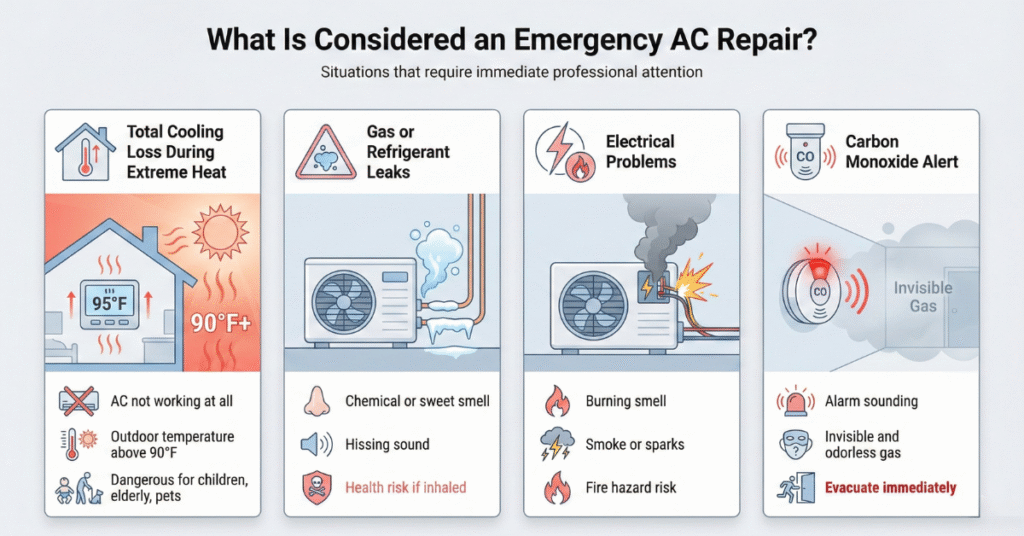
An emergency AC repair is needed when your cooling system fails in a way that threatens health, safety, or could cause significant property damage. These situations require immediate professional attention, regardless of the time of day.
Total Cooling Loss During Extreme Heat
Complete AC failure during a Billings summer is a genuine emergency. When outdoor temperatures climb into the upper 80s or 90s, indoor temperatures can become dangerous within hours. According to climate data for Billings, summer highs regularly reach 85-95°F, with heat waves pushing temperatures into the mid-90s.
If your AC stops working entirely and the outdoor temperature exceeds 90°F, this qualifies as an emergency, especially if vulnerable individuals live in your home.
Gas or Refrigerant Leaks
Refrigerant leaks require immediate professional attention. These chemicals can be highly toxic if inhaled and pose serious health risks. Signs of a refrigerant leak include a sweet or chemical smell near your outdoor unit, hissing sounds, or ice forming on refrigerant lines.
If you smell gas near your HVAC system, evacuate your home immediately and call emergency services. Gas leaks can lead to explosions, poisoning, and asphyxiation.
Electrical Problems: Sparks, Smoke, or Burning Smells
Electrical issues are always emergencies. If you notice sparks, smoke, or a burning smell coming from your AC unit, turn off the system immediately and call for AC repair in Billings. These signs can indicate overheating components, melting wires, or imminent fire risk.
A mild burning smell during the first heating cycle of the season is normal as dust burns off. However, a persistent metallic or electrical burning odor signals a serious problem that needs immediate inspection.
Carbon Monoxide Detector Alerts
If your carbon monoxide detector goes off, treat it as an emergency. Carbon monoxide is colorless and odorless, making it impossible to detect without a working alarm. This gas can cause dizziness, headaches, nausea, and death if not addressed promptly. Evacuate your home and contact emergency services before calling your HVAC technician.
What AC Problems Can Wait Until Business Hours?
Not every AC issue requires an emergency service call. Understanding which problems can wait helps you avoid unnecessary after-hours fees while still addressing issues promptly.
Reduced Airflow or Uneven Cooling
If your AC is running but airflow seems weak, the problem is likely a dirty air filter or minor ductwork issue. While uncomfortable, this situation is not dangerous and can wait for a scheduled appointment. Check your air filter first, as clogged filters are one of the most common causes of reduced airflow.
If your home has uneven temperatures with some rooms cooler than others, this typically indicates a zoning or ductwork problem rather than an emergency. Learn more about why your AC may be running but not cooling effectively.
Minor Temperature Fluctuations
If your AC is maintaining a reasonable temperature but not hitting your exact thermostat setting, this can usually wait. Small fluctuations of 2-3 degrees are normal, especially during extreme outdoor temperatures when your system works harder to keep up.
Strange Noises Without Safety Concerns
Clicking, humming, or mild rattling sounds often indicate a component that needs attention but is not immediately dangerous. However, if noises are accompanied by burning smells, sparks, or complete system failure, treat it as an emergency.
Why Does Emergency AC Repair Matter in Billings, MT?
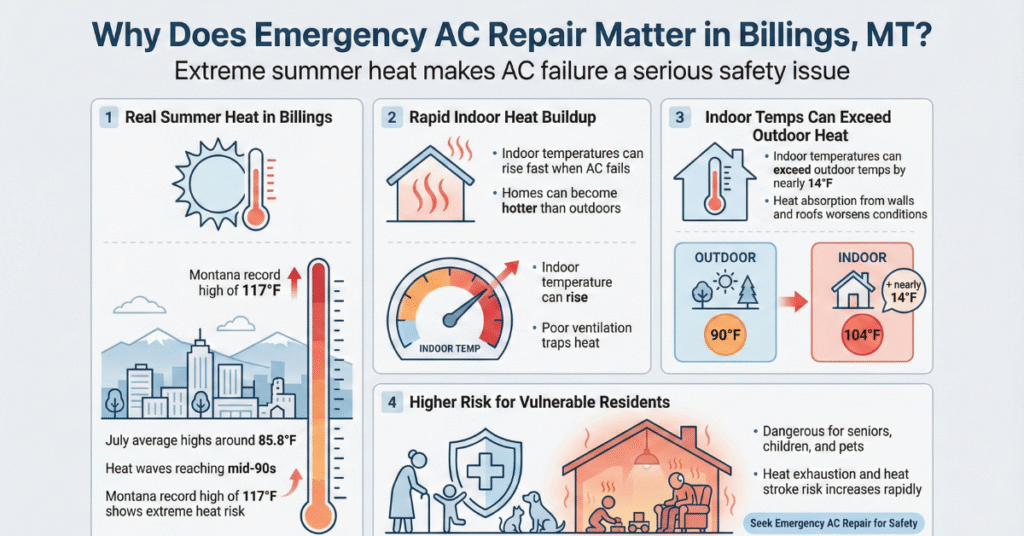
Billings experiences genuine summer heat that makes AC failure more than an inconvenience. According to local climate data, July average daytime highs reach 85.8°F, with heat waves pushing temperatures into the mid-90s. Montana’s record high of 117°F demonstrates that extreme heat is a real possibility.
When AC fails during these conditions, indoor temperatures can rise rapidly. Research shows that indoor temperatures in homes without adequate cooling can exceed outdoor temperatures by nearly 14°F due to heat absorption and lack of ventilation. This creates genuinely dangerous conditions, particularly for vulnerable residents.
Who Is Most at Risk When AC Fails?
Certain individuals face heightened health risks during AC failure. Understanding who is most vulnerable helps you prioritize emergency service when needed.
According to the CDC, adults aged 65 and older are more prone to heat-related health problems. Older adults are more likely to have chronic medical conditions and take medications that affect the body’s ability to regulate temperature or sweat. Research indicates that elderly people spend approximately 90% of their time indoors, making indoor cooling essential for their safety.
Infants and young children cannot regulate body temperature as effectively as adults and rely on caregivers to keep them cool. People with chronic conditions such as heart disease, respiratory illness, diabetes, or obesity also face increased risk during extreme heat exposure.
Heat exposure caused more than 8,000 deaths in the United States from 1979 to 2003, more than all other natural disasters combined during that period. If vulnerable individuals live in your home and your AC fails during hot weather, this qualifies as an emergency situation.
How Much Does Emergency AC Repair Cost Compared to Scheduled Service?
Emergency AC repair costs more than scheduled service, and understanding the difference helps you make informed decisions. We believe in transparency, so here is what you should expect.
According to industry data from HomeGuide, emergency HVAC service typically costs 2-3 times the regular rate, ranging from $140 to $600 per hour depending on the complexity and timing. Some contractors charge a flat emergency fee of $40-$80 extra per hour for after-hours and weekend visits.
Standard HVAC repairs during business hours typically cost $300-$550, while emergency rates can push similar repairs to $600-$1,100 due to urgency premiums and after-hours parts sourcing.
The best way to avoid emergency repair costs is through regular AC maintenance. Annual tune-ups catch small problems before they become emergencies, saving you money and keeping your family comfortable.
What Should You Do If You Have an AC Emergency?
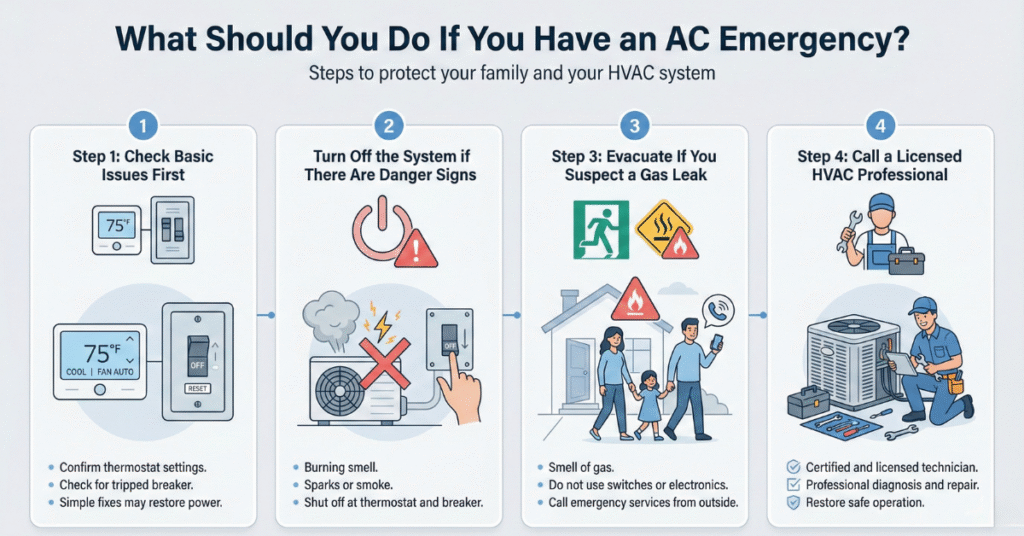
If you suspect an AC emergency, follow these steps to protect your family and your system:
- Check basic issues first. Verify your thermostat is set correctly and check whether your circuit breaker has tripped. Sometimes the solution is simple. Review these troubleshooting steps when your AC won’t turn on.
- Turn off the system if you detect danger signs. If you smell burning, see sparks, or notice smoke, shut off your AC immediately at the thermostat and circuit breaker.
- Evacuate if you suspect a gas leak. If you smell gas, leave your home immediately without using light switches or electronics. Call emergency services from outside.
- Call a licensed HVAC professional. Once you have ruled out simple fixes and confirmed safety, contact a certified technician for diagnosis and repair.
When Should You Call Platinum HVAC for Emergency AC Repair in Billings, MT?
Call for emergency service if you experience any of the following: complete cooling loss during temperatures above 90°F, especially with vulnerable family members at home; any smell of gas, burning, or chemicals from your HVAC system; sparks, smoke, or visible electrical problems; or carbon monoxide detector alerts.
Platinum HVAC’s licensed technicians are available around the clock because we understand that AC emergencies do not follow business hours. Our team provides honest assessments and transparent pricing, even during emergency calls.
Not sure if your situation is an emergency? Call and speak with a local HVAC professional. We would rather help you determine that your issue can wait than have you suffer through a dangerous situation.
Protect Your Family With the Right Response
Knowing what qualifies as an emergency AC repair helps you respond appropriately when problems arise. True emergencies involve health risks, safety hazards, or potential system damage. Issues like reduced airflow or minor temperature fluctuations, while frustrating, can typically wait for scheduled service.
If your AC issue cannot wait, our emergency technicians are available now. Call Platinum HVAC for 24/7 Emergency AC Repair in Billings, MT and let our experienced team restore your comfort quickly and safely.