 Skip to content



Choosing the right smoke alarm for your home isn’t just about checking off a safety requirement. It’s about understanding how different technologies respond to real fire situations. Most homeowners in Billings don’t realize that the type of smoke detector they install can mean the difference between early warning and dangerous delays.
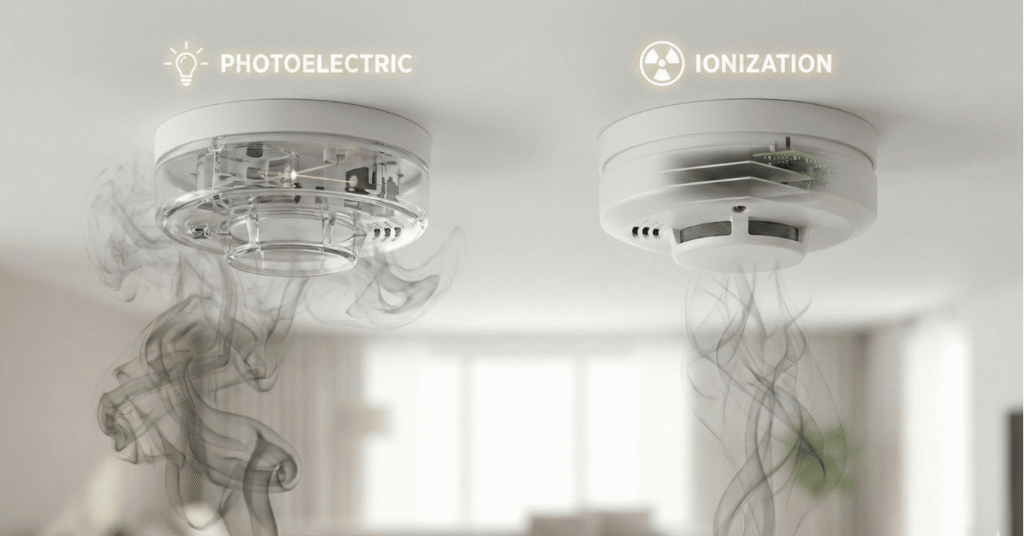
Photoelectric vs Ionization Smoke Detector
The two main types of smoke detectors you’ll encounter are photoelectric smoke alarms and ionization smoke alarms. Each uses different sensor technology to detect smoke, and each has distinct advantages depending on the type of fire. At Platinum HVAC, we often discuss home safety during our service calls because proper fire alarm installation works hand-in-hand with a well-maintained HVAC system.
How Photoelectric Smoke Alarms Work
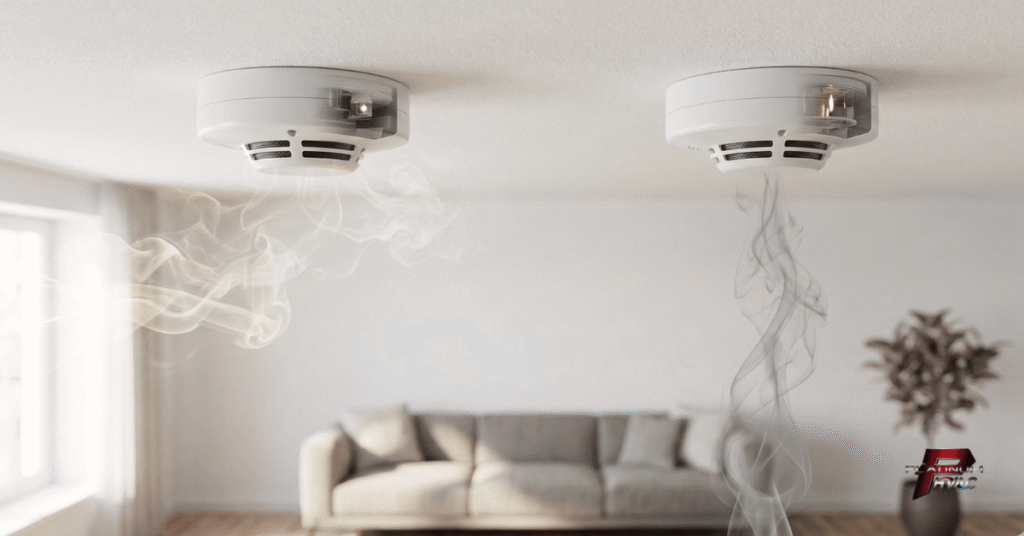
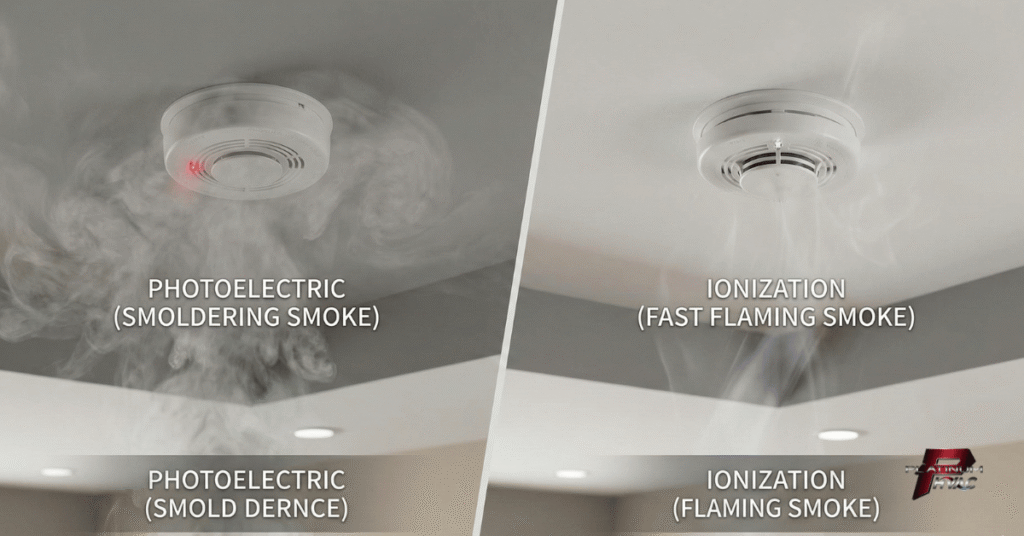
Photoelectric smoke detectors use a light source and a photoelectric sensor positioned at an angle inside the unit. When smoke enters the chamber, it scatters the light beam toward the sensor, triggering the alarm. The technology excels at detecting smoldering fires that produce heavy smoke before flames appear.
Key advantages of photoelectric detectors:
- Highly effective for detecting smoldering fires and smoke particles from slow burns
- Fewer false alarms from cooking smoke or steam
- Better performance near kitchens and living areas
- Ideal for bedrooms where early smoke detection matters most
- Photoelectric smoke alarms respond 15-30 minutes faster to smoldering fires compared to ionization models
How Ionization Smoke Alarms Work
Ionization smoke detectors contain a small amount of radioactive material between two electrically charged plates. This radioactive material ionizes the air, allowing current to flow. When smoke particles enter, they disrupt this current flow, triggering the alarm.
Key advantages of ionization detectors:
- Responsive to flaming fires with 30-90 second response time
- Lower initial purchase cost
- Widely available and compact design
- Effective in areas prone to quick-ignition fires
- Ionization alarms often detect visible flames faster than photoelectric models
However, ionization smoke alarms are prone to false alarms from steam, cooking smoke, and dust. Many homeowners disable them out of frustration, which compromises fire safety in your home.
Photoelectric vs Ionization: Understanding the Differences Between Ionization and Photoelectric Technologies
The photoelectric vs ionization debate comes down to how each type of smoke alarm responds to different types of fires. Most residential fires begin as smoldering events from electrical malfunctions, forgotten candles, or heating equipment issues. These produce smoke long before visible flames appear.
Ionization vs photoelectric comparison:
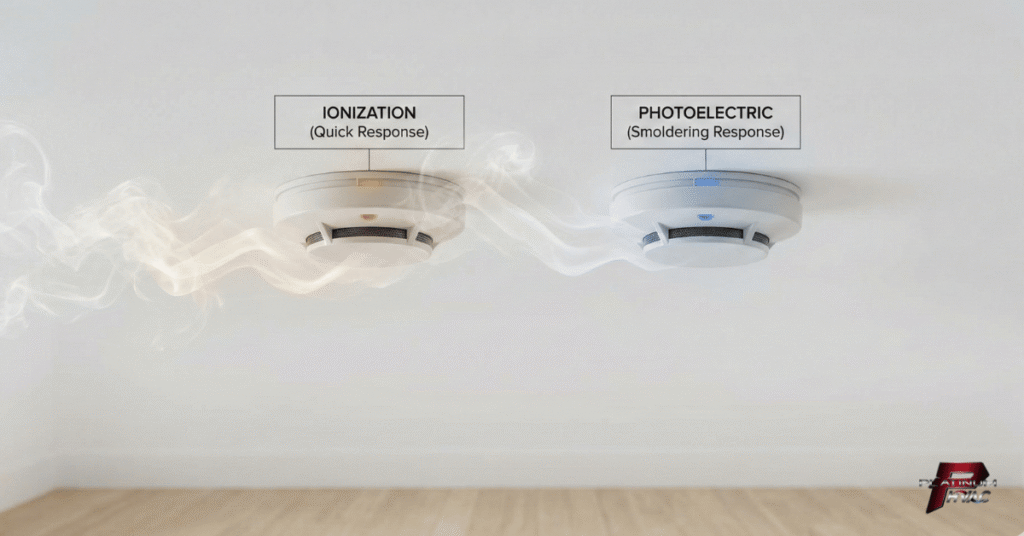
- Photoelectric alarms provide best protection for smoldering fires (1-3 minute response)
- Ionization alarms are responsive to flaming fires (30-90 second response)
- Photoelectric detectors have low false alarm rate, acceptable for kitchen placement
- Ionization detectors have moderate to high nuisance alarms, not recommended near kitchens
- Both detector types require cleaning, repair, and regular maintenance every 3-6 months
What Fire Safety Experts Recommend: Combination Smoke and Carbon Monoxide Alarms
The National Fire Protection Association (NFPA) recommends installing both types or choosing combination smoke and carbon monoxide detectors that utilize both ionization and photoelectric technologies. This approach provides the best of both worlds for complete fire protection.
Strategic installation guidelines:
- Install working smoke alarms inside each bedroom and outside sleeping areas
- Mount hardwired smoke detectors on ceilings or high on walls
- Keep detectors at least 10 feet from cooking appliances to reduce false alarms
- Avoid placing near HVAC vents where airflow affects how detectors work
- Install one alarm on every level of your home including basement
During heating repair and AC installation work, Platinum HVAC often notices outdated or poorly placed fire alarms. Your HVAC system affects how quickly smoke enters detector chambers, so proper maintenance improves smoke detection effectiveness.
Maintenance, Cleaning, and Repair for Reliable Alarm Sounds
Both ionization and photoelectric smoke alarms need regular attention to detect smoke effectively. Dust and airborne particles accumulate inside sensing chambers, reducing sensitivity over time.
Essential maintenance tasks:
- Clean detectors every 6 months using soft brush vacuum attachment
- Test alarm sounds monthly by pressing the test button
- Replace batteries twice yearly when adjusting clocks
- Check model number and manufacture date on each unit
- Replace entire detector after 10 years regardless of condition
This simple cleaning prevents most nuisance alarms and maintains proper sensitivity. Replace batteries on a schedule, not just when the low-battery chirp starts.
Choosing the Best Smoke Detector for Your Home
The best smoke detector for most Billings homes is a dual detector that combines ionization and photoelectric smoke technologies. These combination smoke units cost $30-$60 but provide comprehensive protection against both smoldering and flaming fires, giving your family one alarm that offers the best protection.
Photoelectric smoke alarms work best for bedrooms and living rooms where people spend significant time. Ionization alarms often perform better in garages and utility rooms where fast-flaming fires are more likely. Dual detectors eliminate the guesswork and provide complete coverage everywhere.
Your home’s fire safety depends on working smoke alarms and properly maintained heating and cooling systems. Furnace malfunctions and electrical issues in HVAC equipment create fire risks that detectors warn you about. Regular HVAC maintenance from Platinum HVAC helps prevent these issues, including fire in the kitchen caused by faulty appliances.
Don’t wait until smoke detectors fail or inspections reveal problems. Walk through your Billings home today and check every alarm for proper installation, test them, clean them, and verify manufacture dates. If you’re unsure about placement or need recommendations, our team at Platinum HVAC can offer guidance during any service visit.