 Skip to content




Every home cook has faced the challenge of draining hot pasta water or dealing with food debris in the sink. That’s where a kitchen sink strainer becomes your reliable partner. This simple yet essential tool makes food preparation safer and prevents costly plumbing issues.
A sink strainer is a bowl-shaped or basket-style device that fits into your kitchen sink’s drain opening. It catches food particles and debris from clogging your sink while allowing water to flow freely through small holes or mesh. Whether you’re washing dishes or preparing meals, understanding the different types of kitchen strainers helps you maintain a clean and functional workspace.
Kitchen Sink Strainers and Their Purpose
A strainer serves one primary function: preventing food scraps and debris from entering the drain. The perforated or mesh design allows water flow while keeping solid materials contained. Most sink strainers feature a basket that collects waste, making kitchen cleanup simple and protecting your plumbing system.
The holes in a strainer can range from larger openings to fine mesh construction. This variety lets you tackle different tasks with the right tool. Just like maintaining your home’s comfort requires professional help from Platinum HVAC in Billings, MT, keeping your kitchen sinks functioning properly means having the right drain strainer installed and maintained.
Types of Kitchen Sink Strainers
Understanding the 5 types of kitchen sink options helps you choose the best fit for your needs. Each type offers specific benefits for different cooking styles and sink configurations.
Basket Strainer
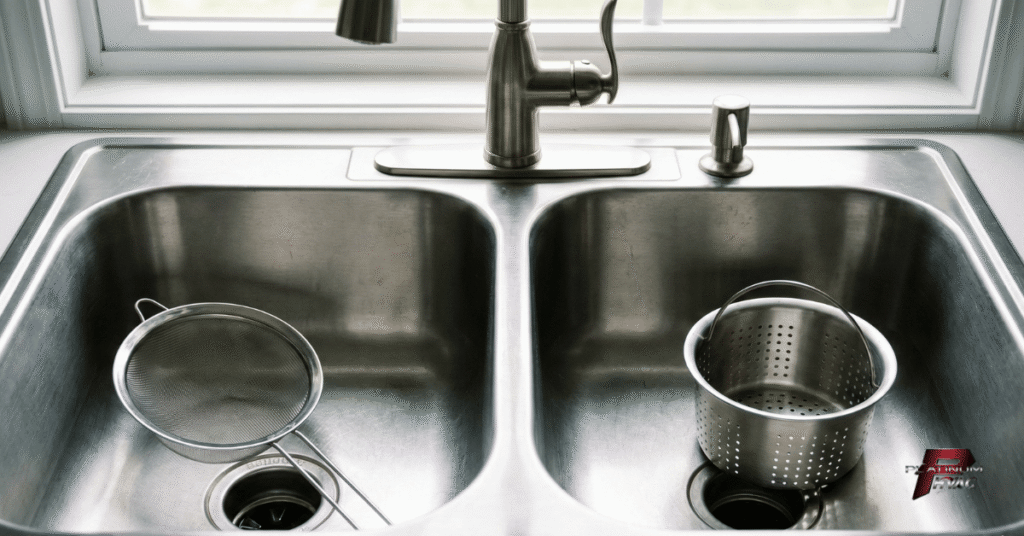
The basket strainer is the most common type found in kitchen sinks. This design features a removable basket that sits in the drain opening and catches food while letting water drain freely. The stainless steel basket lifts out easily for cleaning and disposal.
- Perfect for everyday food particle collection
- Easy to clean and dishwasher safe
- Fits most standard drain opening sizes
- Durability makes it ideal for frequent use
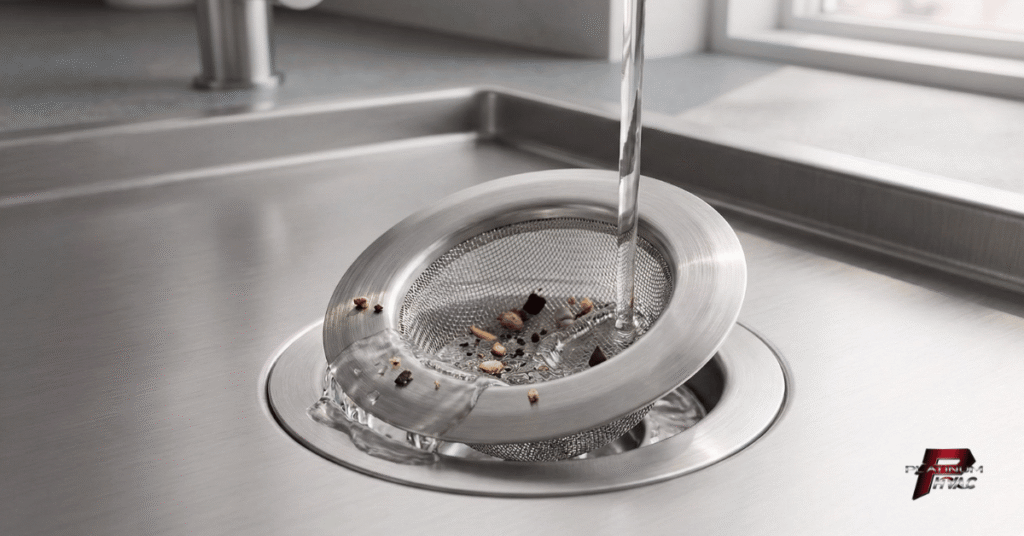
Mesh Strainer
This type features tightly woven stainless steel mesh instead of larger holes. The fine mesh catches even the smallest particles that would slip through a regular strainer. Professional kitchens rely on fine-mesh strainers for delicate tasks and thorough debris removal.
Stopper Strainer
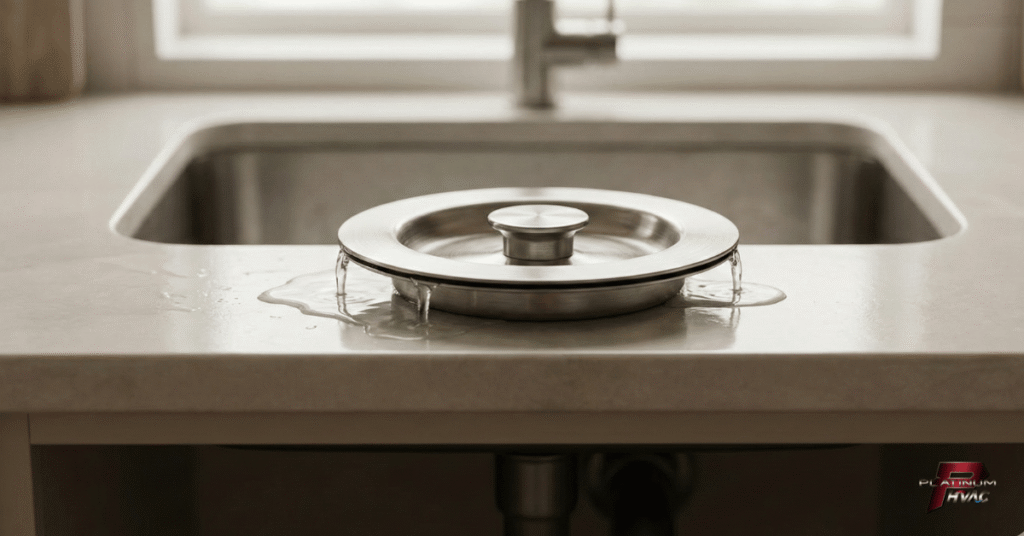
A strainer and a stopper combined in one unit provides dual functionality. The stopper function lets you fill the sink with water when needed, while the strainer catches debris during normal use. This versatile option works well for households that frequently soak dishes or wash large items.
Flange Strainer
The flange strainer installs permanently using a flanged washer and drain tailpiece. This creates a tight seal between the sink and drain, preventing leaks. The visible flange sits on top of the sink area, while the basket portion extends into the drain below.
Double Cup Strainer
The double cup strainer features two pieces that lock together, creating a secure seal at the bottom of the sink drain. A back nut strainer mechanism holds everything in place. This design prevents water from leaking around the sink drain fitting while maintaining excellent drainage.
Common Tasks for Kitchen Sink Strainers
Sink strainers handle far more than just catching food during dishwashing. These kitchen tools prove their worth throughout your daily routine in ways you might not consider.
A standard drain strainer catches everything from coffee grounds to vegetable peelings. The basket prevents these items from going down the drain and causing a clog in your plumbing system. Regular use keeps your drainage system flowing smoothly and avoids expensive repair calls.
Food preparation generates various waste materials that benefit from proper straining. When you rinse vegetables or strain pasta using a colander over the sink, smaller particles still wash toward the drain. Your sink strainer provides that final line of defense, maintaining a clog-free kitchen.
The strainer comes in handy during cleaning tasks too. It catches sponge pieces, food particles and debris, and other items that accidentally fall toward the drain opening. This simple barrier saves you from fishing items out of pipes or calling for installation help.
Selecting a Sink Strainer for Your Kitchen
Material and Build Quality
Stainless steel sinks work best with stainless steel strainers for consistent performance. These resist rust better than other materials and handle daily use without deteriorating. Stainless steel mesh or perforations provide reliable water flow while catching debris effectively.
ABS plastic strainers cost less but may not offer the same resistance to rust or durability. Cast iron sinks sometimes require special consideration for proper fit. The strainer fits should match your drain opening and depth precisely for leak-free operation.
Design Features That Matter
Look for strainers that are easy to clean with smooth surfaces that don’t trap residue. Some models include a long handle or handles on either side for convenient removal. Others feature a drain stopper built in for added versatility in your sink without sacrificing straining capability.
The space between the sink and strainer basket affects how well it catches particles. Fine mesh strainer designs trap more debris but may slow drainage slightly. Strainers with larger holes allow faster water pressure but might miss smaller food particles.
Installation and Compatibility
Most strainers for kitchen use install without professional help. The strainer is made to fit standard 3.5-inch drain openings, though you should measure your specific sink before purchasing. Some designs require a sink drain fitting that connects to your existing plumbing.
Different types of kitchen sink configurations may need specific strainer styles. Double sinks often work best with two matching basket strainers. Deeper sinks might need strainers with extended baskets to reach properly.
Maintaining Your Kitchen Sink Strainer
Proper care keeps your drain strainer working effectively and plays a vital role in maintaining the functionality of your entire kitchen. Clean the basket or mesh at least once daily to prevent buildup. Food scraps left sitting create odors and can attract pests.
Rinse your strainer immediately after washing dishes or food preparation. Stuck particles become harder to remove once dried. Most stainless steel strainers are easy to clean in the dishwasher, though hand washing takes just moments.
- Scrub mesh thoroughly to remove trapped particles
- Check for damage or rust monthly
- Replace worn strainers to prevent leaks
- Avoid harsh chemicals that damage materials
- Keep drain area clean for better water flow
Preventing Common Sink Problems
Regular strainer maintenance prevents expensive plumbing repairs and keeps your kitchen running smoothly. The strainer catches materials that would otherwise create a blockage deep in your pipes. This protection extends the life of your entire drainage system.
Used to strain everything from pasta water to vegetable scraps, your sink strainer works hard daily. Preventing them from entering your plumbing saves money on repair and installation costs. A functioning strainer also prevents unpleasant backup situations that disrupt your household.
Watch for signs that your strainer needs replacing. Rust spots indicate deterioration that could allow debris through. Loose fit or damage to the basket means it’s time for a new one. Platinum HVAC professionals understand that preventive maintenance beats emergency repairs, whether for your heating system or your kitchen sink strainer.
Making the Most of Your Strainer
A quality sink strainer serves you reliably through countless meals and cleanup sessions. This essential tool deserves attention as one of your most-used kitchen tools. Common types of strainers all share the goal of keeping your kitchen sink flowing freely while catching unwanted debris.
Choose strainers that match your sink material and cooking habits. Heavy users need durable stainless steel options, while occasional cooks might prefer simpler designs. The right strainer works quietly in the background, keeping your kitchen functional and your plumbing system healthy.